I write words and make music under various project names. I publish a monthly long form essay here, and the odd short piece. Feel free to get in touch – I’ll do my best to get back to you.
In the process of developing my writing practice I’ve come to realize that, at least for me, there are only two types of writing days: really good or really bad.
On the really good days, I find music to be an impediment: it pulls me out of the focused, flowing state into which I have been lucky enough to slip and seeps into the naturally occurring cracks between thoughts, filling the space where something unexpected and perhaps even true might have bloomed with the known, solid fact of a recording, a still and easy beauty that distracts me from the feebly stirring, naked, sometimes very ugly but no less precious thing I’m trying to keep from dying on the table. In other words, it fucks everything up.
On the really bad days, though, when I have either so many thoughts jumbling together that they are suffocating one another in a kind of nightmarish festival crowd crush, or so few that I can practically feel the dust motes falling onto the floor of my apparently hollow skull, music can be a lifesaver.
Listening separates me, at least somewhat, from myself, which, given my tendency to spend many hours alone on many days in a row in a small room thinking, is an intrinsic relief. I find that with the little gift of this separation I become able again to clearly and without judgement rebalance the respective levels of the critical and the creative in my thinking, which sets my writing working again. Without that symbiosis, I’m screwed.
Music is also simply a pleasure, one which I find can introduce just enough of a dopamine pick-me-up to encourage my brain-which is often lacking in that department, and in sleep-to get going: to walk to where the fragments are and start picking some up and putting them together. To start doing the work.
Music can be that deep breath that carries me, still a child trying to swim the length of the pool without coming up for air, across. (Or, if you’re a pessimist, perhaps it’s the microdose of coke that gets the rat going through the maze again.) The worst thing that can happen is that we have to come up for air and try again.
For myself, and for anyone else who finds they run out of breath every once in a while, I’m curating a mix of music that I find particularly suitable for the act and process of writing. I use the present tense because I suspect that, like the universe, it will be ever-expanding. Shuffle it, play it in order, steal one or two pieces from it: I hope it might help. It consists of music without lyrics, (mostly) without voices, and without, for the most part, overt rhythm – all things that tend to take me a little bit too far into active listening territory for writing. As a musician who has a hard time listening any other way, I’ve tried to be extra sensitive about my choices in order to avoid distraction. This does not mean that I think this music is not worthy of close attention, only that it is not the type to get up in your face and demand it. (I have a deeply skeptical view of ‘ambient’ music as both an idea and a reality, given just how precious music is to me and how much of daily life is already choked up with noise of all kinds, but – for the times when quiet, for whatever reason, feels genuinely difficult to deal with, I can let it slide.)
An aside: this mix is populated with quite a few pieces by Morton Feldman. Somehow his work feels uniquely suited for writing, and I think I have some idea of why. A teacher of mine once posited that you only really get in to a Feldman piece quite a while after it has started, ‘a while’ meaning, in some cases, a duration exceeding the length of an average symphony. Only after your heartbeat calms, and the constancy of your breathing becomes apparent to you again-in other words, when your physical rhythms slow enough for your mental processes to become conscious-can you reach the state of emptiness required for his music, which is usually cyclical, quiet, and somehow fragile, to really flow through you. While I would call this state of mind ‘presence’, I suppose some would call it boredom. I think either state is valid, and both can provide the conditions for good writing.
Feldman’s music, especially his later output, is a direct result of a writing process which he describes thusly:
“[Lately] I’ve been writing very long pieces… only because of my concentration. My pieces are to some degree a performance. I’m highly concentrated when I work…
When I sit down and write a piece. I’m in thought. And as I’m moving, I’m focusing from one thought to another. And the whole idea of being in thought is to find the right kinds of notation at that moment that presents that thought. How can I talk about my work? I’m intensely involved as I do it. Most of the time I write in ink. And I don’t write in ink because I feel the work is “ex cathedra”. I write in ink because it is a way of telling me how concentrated I am. That is, if I start using my eraser, or if I start changing things, I get up and I have breakfast. I’m not concentrated. I thought I was concentrated. I’ve got no plans for the day, but I put in a day’s work. And that’s an intuitive feeling. I might work around the clock. I might work 10 hours, 15 hours. I might work 2 hours. I have to feel I did a day’s work, that I shouldn’t go on. But I don’t leave the house. I’m waiting.”
I share this only because, as a writer of words who also makes music, practical experience tells me that this advice can be just as useful for writers as it might be for composers. When Karlheinz Stockhausen asked Feldman what the secret of his music was, he replied, famously, “I don’t push the sounds around.” These days I try to do the same: to not push the sounds, or the words, or the thoughts, or the feelings, for that matter, around. All I want when I wake up in the morning is the little I need in order to concentrate: to focus from one thought to another, to think a bit but not too much, in other words, to work.
Some days, silence is enough. Sometimes, you need a little music. And maybe a cup of coffee. I’m off to make some now. See you around.
Sacrificial Code – Live in Hagakyrka – Kali Malone
Prelude – Live in Hagakyrka – Kali Malone
I Will Surround You – Stars Of The Lid
Mullholland – Stars Of The Lid
The Lonely People (Are Getting Lonelier) – Stars Of The Lid
Broken Harbors, Pt. 2 – Stars Of The Lid
Broken Harbors, Pt. 3 – Stars Of The Lid
Living Torch I – Kali Malone
Pacific Ocean – Dirty Beaches
Dust Breeding (1.316)+ – Stars Of The Lid
Mono No Aware – William Basinski and Lawrence English
In Stellar Orbit – Raum
1483 Caxton Golden Leg. 208 B/2 He Put Not Away the Wodenes of His Flessh With a Sherde or Shelle. – Akira Rabelais
Sleep – Grouper
With the Gift of Your Small Breath – Akira Rabelais
Occam River XXII – Éliane Radigue, Carol Robinson, and Bertrand Gauguet
Jetsun Mila Pt. 1 – Éliane Radigue
Kailasha – Éliane Radigue
Phantasmagoria of nothingness (Prey to our emotions) – Chubby Wolf
On burnt, gauzed wings – Chubby Wolf
Kyema (Intermediate States) – Éliane Radigue
Made of Air – Grouper
Watermusic – William Basinski
Watermusic II – William Basinski
NB: I highly recommend reading Feldman’s writings and interviews. They are full of thought-provoking ideas about art of all kinds and are often highly entertaining.
I find it very difficult to remember any of the time I have spent with the music of Liz Harris, who records mostly as Grouper. That may have something to do with the fact that the periods of my life in which I have spent the most time listening to it are those which I have tried my hardest to forget. A few fragments remain: a night walk, in spring, processing the sudden, unresolved ending of the closest relationship I have ever had; a series of evenings spent listening to her early records in the cavernous basement on a wooded hill in which I lived alone for a while, the bare echoes of her voice mixing with their own reflections as they broke against the walls; an afternoon when I laid down, exhausted, atop a set of sunny steps and listened to her album Dragging a Dead Deer Up A Hill in full in a failed attempt to escape myself in sleep.
In each fragment I find myself sleepless and alone. It cannot be a coincidence that those words are also apt descriptors for Harris’ recording process, and probably the two most consistent thematic throughlines of her music. She has spoken at length in interviews about her solitary tendencies, which she says run as far back as early childhood, and her experiences with the insomnia and sleep deprivation which have, in part, enabled her to record as prolifically as she has. She spent many years working as a social worker by day and recording at home late into the night and early morning, and, especially on her earlier recordings, you can tell: hers is the most distinctly nocturnal music I have ever heard.
No doubt this is why Grouper appears on so many of those playlists of ‘music to sleep to’. On a surface level, the droning harmonies, slow tempos, heavy use of reverb and delay, and the ever-present hiss of the cassette tapes onto which she records check all the boxes of this kind of algorithm fodder; and yet: I have never once been able to fall asleep to her music. I feel that it is too true–too personal a record of her inner life and circumstances, too much a manifestation of real loneliness and real sleeplessness and real feeling, and too utterly lacking in pretense–for me to ignore. And her voice. The repeating sway of her melodies and the unstrained, natural quality of her singing make it tempting to call her songs lullabies, but one typically thinks of lullabies as being sung to someone else, and I get the sense that she is singing only to herself. On many of her records her vocals are literally whispered; on others, they are mixed down so quietly or are so heavily blanketed in reverb as to be completely unintelligible. I don’t believe that Harris’ obfuscation of her lyrics means that they are insignificant–in fact I think that to her they are very significant, and that perhaps this is why they are sometimes obscured–and so even when I know that I won’t be able to make them out I can’t help but to try, and so her songs keep me awake. Hers is music to be sleepless to.
Sleeplessness is a strange thing. In it, we are too tired to form new memories and yet too awake to be unaware, as we are in dreams, of the passing of time. We are always losing the future as it becomes the present, but in sleeplessness we also fail to record the present–as we would when fully awake–and so we lose it too, which means that as we move into the future we have also lost a great deal of the past. We watch, in a state of passivity, as time drifts by, aware of what we are losing as we are losing it, unable to save or capture it. There is nothing to do but wait, either for sleep to take you or day to break. What remains is a quiet feeling of having lost something, something whose shape and weight is that of the empty space it has left behind. Spend enough time sleepless, or living in your memory, or depressed–all similar and related states–and this loss becomes a constant, haunting companion: a ghost, of sorts.
Perhaps Grouper’s songs are lullabies, but not for us: they are lullabies for the ghost; and, in a way, physical manifestations of it, ghosts themselves. About a record of hers entitled, fittingly, Dream Loss, she says that “Those songs were written during the beginning of [a] time… when I was thinking of tons of songs, but having trouble recording any of them. I felt really haunted by them, lost children.” Recording is her way of waiting for the day, of processing this dream loss and making something of it.
To record something is to save it-to snatch it back from the jaws of the past before it is swallowed forever-but at a cost. The act of recording an experience–whether through sound, music, photography, or film–is not the same as the act of experiencing it. There is, inevitably, a remove. It is a completely different thing to play music while you are being recorded, for instance as a member of a studio orchestra or a group of jazz musicians, than it is to make music by recording yourself, which is what Harris does. Her work is not about the capture, or preservation, of an experience or moment in time but the construction of one. It is about the construction of memory.
We are all recording, all the time, in our minds. Our brains are tracking all of the sensory input and mental processes we experience to the master tape of memory. But remembering is not a process over which we have a great deal of control. We forget, we misremember – precious things get lost, the mundane vanishes, and things we’d rather lose refuse to go away. While we can suppress traumatic memories, or take particular care to preserve joyous ones, ultimately we cannot, in memory, choose what is saved. In making a record, we can. Naturally, there is a temptation to record everything all of the time. Many people make valiant and doomed efforts to do this with their phone cameras. But the urge to make things permanent, real, and lasting can be all-consuming. Harris describes feeling a need to actually try to stop herself from recording: “to block it… purposely keep myself from playing. That’s the main issue I’ve had around creation. After years of recording every night I began to compartmentalize it, to keep it from overtaking my life.” Every minute spent creating a recording comes at the expense of a minute of the present, of life, that cannot be recovered. Given the amount of time that even such stark, minimal music as Grouper’s takes to make, the exchange rate is not favorable. Recording is robbing Peter to pay Paul, and the currency is time, the most precious thing of all.
Of several albums recorded in the late 2000s (both A I A records and The Man Who Died In His Boat) Harris says that she “honestly [doesn’t] remember making a lot of the songs.” In another interview, she states that she doesn’t usually remember how she feels when recording, or even the process itself, only “the moments before and after maybe“. Cover the Windows and the Walls, an album of hers from 2007, is, she says, “a complete mystery… I have no memory of making it.” When we take into account the circumstances of her music’s making, under the deleterious effects of insomnia, this is not surprising. Sleep is the way by which memories are imprinted and consolidated; its disruption damages and can erase that fragile strip of tape. Her music is the product of a choice-or perhaps a compulsion-to record rather than remember.
There is a term in audio engineering–masking–which can describe either the obfuscation of one sound by another, when they lie in a similar frequency range, or the obfuscation of sound by noise. Masking usually has a negative connotation – it is something to be avoided, an error. Grouper’s music is full of, even dependent upon it. The noisiness and distortion and the muddy, rippling reverb and delay of her recordings may have been, initially, a byproduct of circumstance, learning pains, and cheap equipment, but at some point she could have chosen to begin recording more ‘professionally’ – and she did not. “Distortion and mistakes, silence, deep sadness and misunderstanding, they all,” she says, “have a place” in her music. Not only does masking have a place in her music, I think-though I can only speculate-that it was for a long time the music’s intended function.
We all mask, to varying degrees and via differing means: art, consumption, drugs, sport, games, anything. I know I have spent years doing it, compulsively, constantly: masking personality, masking emotions, masking memories. But masking can only be a temporary and partial relief, because it is not a release. All of that buried material lies under the surface like heavy water. It pools, rotting the pillars of the self, and tends to well up unexpectedly. It is painful to relive unpleasant memories after you have spent so long trying to hide them from yourself, and more painful still to realize, on wracking your memory for happier ones, that there aren’t many. Not because you have never experienced happiness or joy but because pain has an easier time of breaking through the mask, and so the memories which tend to stick around are often the ones which hurt the most. We construct ourselves through past experience as filtered through memory, and a memory composed only of the bad is not the foundation for a good life.
Looking back at the years in which I have held Grouper’s music the closest, I see–I remember–very little. It seemed for a long time as though workaholism and isolation had erased many of my memories, though perhaps it was simply that the kind of memories which those conditions tend to produce aren’t worth saving. Years of my life had gone missing, slipping through my fingers like smoke. I can see now that, over the course of those years, many of the things that make a life worth living-feeling, touch, care, connection, closeness, friendship, love-had sort of just dropped out of my mine like baby teeth. A natural enough part of growing up, I suppose, but a cause for concern if nothing grows back in their place. These losses constitute the kind of wounds which, while they may not kill you, per se, ache, painfully. Grouper’s music filled the spaces of emotional absence, the places where feelings and memories should have been. While her music, like so much gauze packed into a wound, did not heal me, it affirmed that the wound was there, and helped put a stop to the bleeding while I set about figuring out how I could heal myself. For a long time, the comfort and value of her music to me was in its masking: the way each minute of her music could fill a minute of a life I didn’t know how to live and at times wasn’t sure I wanted at all. The comfort and value of it now is in seeing that her work has, over its twenty-year period of release, bent without fail towards peace.
Ever since her album Ruins, which was recorded amid the physical ruins of a Portuguese ghost town and the emotional ruins of a long-term relationship–a record which she says “helped crack [her] open“–her music has become clearer and more intimate. The masking has largely been stripped away, the reverb shimmers rather than submerges, and on many songs you can even make out every word. She seems more content to let her voice, the wonder of its existence, be enough. Her music has always been accepting rather than self-pitying, and now it has an air of forgiveness and calm about it. Hidden, here and there, are even little pinpricks of joy. This relief appears to extend to and perhaps stem from her personal life: in more recent interviews she speaks at length of balance: sleeping more, touring and recording less, and keeping more of a separation between her music and her self. She is still haunted by unrecorded songs, but then don’t we all leave things undone? Dream loss, memory loss, the toll of time: they are all inevitable. It is good to be afraid of them – it means you have something to lose.
As my own life has begun to come back into focus, slowly, and the feelings and colors return, I find that listening to Grouper now dredges up vague recollections, memories of memories – scraps of feeling and experience which have clung to her songs and so survived, rescued by the music with which I had tried to replace them. As they surface, I am beginning to put myself back together again. I do not have the full picture and I never will, but I am treating each memory as its own small miracle. Perhaps they were never lost in the first place – just buried, masked under that heavy water, lost children, waiting to be found.
Her songs sound, and feel, different now. They are more and more moving. I can hear the simple, pure beauty in them drifting through and above the murk, and I appreciate it all the more for having been unable, for so long, to hear it – for knowing both sides now. Still, I find myself sticking to her later work. The older songs are somewhat uncomfortable to listen to, a bit too evocative of exactly what it feels like to be trapped under the surface. It doesn’t do to dwell.
One of my favorite songs of hers is called “I’m Clean Now” (from the 7” Paradise Valley). I’m not sure what those words mean to Harris, but for me they have always been a metaphor for memory. To be clean, I thought, was to be free from memory, from the past, from myself. To forget everything, to dissolve, to disappear completely. Short of traumatic amnesia, a coma, or death, this is of course impossible. I hear these words completely differently now. They no longer offer the possibility of escape, but rather the possibility of hope. Perhaps to be clean is to be done with masking, with hiding, with sleeplessness and sleepwalking. To see the self, clearly and without judgement, and so perhaps to be seen by others. Perhaps to be loved. To see the present, meaning to make memories again. To see the past, meaning to remember. One of my strongest memories from the bad years is waking well before sunrise and taking the bus out to Dún Laoghaire to swim in the Irish sea – in my boxers, in December. The water was so cold that, when it hit my chest, I struggled to breathe. I spent the rest of the day roaming the dirt paths which run along the coast on my own, damp and shivering and grinning. That kind of clean. In spite of all the awful experiences which preceded that morning and were soon to follow, pressing against it menacingly on either side, it remains perhaps the happiest of my entire life. Perhaps there will be another such morning. Perhaps to see the future, meaning to live, again – and in such a way that the day may come when I can say, in all honesty – I’m clean now.
Endnotes:
I took the title of this essay from T.S. Eliot’s poem The Waste Land (1922), specifically this passage from part five (“What the Thunder Said”), which happens to describe the actual sound of Grouper’s music better than anything I could ever come up with:
“A woman drew her long black hair out tight
And fiddled whisper music on those strings
And bats with baby faces in the violet light
Whistled, and beat their wings
And crawled head downward down a blackened wall
And upside down in air were towers
Tolling reminiscent bells, that kept the hours
And voices singing out of empty cisterns and exhausted wells.”
I find an eerie number of parallels with this mise en scène in her track “Hollow Press” from her 2007 collaborative record with Roy Montgomery.
Some songs which are relevant to this essay, for the curious: Youtube | Spotify
Some other non-profile/interview writings people have done on Grouper which I really appreciate and recommend:
(on Hollywood and Film Music and Jóhann Jóhannsson and Me, or, why you might reconsider a career in [Hollywood] film music.)
This is a long one, I’m afraid. If you want a quick-and-dirty rundown on the ‘why you should reconsider a career in Hollywood film music’ side of things you can jump here.1I have used endnotes throughout this piece in order to make it a more concise read.
From Gustave Doré’s illustrations of Dante’s Divine Comedy (Canto I).
“Midway upon the journey of our life I found myself within a forest dark, For the straightforward pathway had been lost.” – Dante, Inferno, Canto I2
When I was nineteen, I decided to become a film composer. This was not a reach towards a long-nurtured dream but instead a leap for purpose, direction, and hoped-for protection against forces that have felt always slightly out of my control. In a life composed so much of shifting moods and fragmentary identities it was a relief to feel as though I had found, somewhere out there in the dim future, the shade of the person I needed to be. A road had opened before me, at the end of which he waited, and all that was required of me was that I keep walking: no matter the danger, or the cost, what I might need to leave behind or what I might see, forgoing all misgivings or second thoughts. I would even have a guide: the Icelandic composer Jóhann Jóhannsson, whose work-especially his scores, for films like Arrival (probably still my favorite film, if I had to choose) and Sicario-had changed my life. His music and his too-young death moved me, onwards, no longer searching but following, certain of what I wanted, of everything I was willing to lose. I was, of course, utterly wrong. But as the song goes, everybody’s gotta learn some time. I’m just glad I changed my mind before mine.
I am not a film composer. Thankfully. I am lost, still, but differently, consciously and gratefully so, free from the temptation of that one-way road through the dark woods and happy-genuinely, for the first time in almost as long as I can remember, happy-to be cutting, in haphazard and jigsaw fashion, my own. Every bit of hard-won joy I feel in doing this slow, arduous, and uncertain work is an embodiment of what I could have lost. I only know this because, for a little while, I took that road. While I don’t regret it, I feel some obligation to offer a word or two (or a few thousand) of caution to any would-be travelers. I can give no advice, only a story. It starts, more or less, on a plane flying across the country. Scott Hutchinson is singing, pleading: “Los Angeles, Be Kind“. I was going somewhere-somewhere new. I was going there to be someone-someone new.
I worked as an assistant for a very successful Hollywood film composer for about six months, mostly during summer breaks from university. The first summer I lived in a room, which they very generously offered to me, located near their studio in a sleepy beach town in L.A. Sometimes groups of birders gathered in the parking lot across the street, peering into the palm trees. One afternoon I heard pops and looked out of the window to see people running out of the lot; later, a shirtless man with blood running down his right side, sitting in cuffs on the sidewalk. Two people were wounded; no one died.
The next summer I rented a room for $1,300 a month (inclusive of the dirty wall-to-wall carpet, the window with its broken blinds and only semi-functional lock, and a solitary dresser) in an apartment with three roommates and three cats. The leasing corporation was so incompetent and so insistent on their need for all of my banking and social security information that eventually I just gave up and moved in without signing a lease, paying my roommates rent in cash. The neighborhood was mostly so quiet it felt deserted. Occasionally the college kids across the street threw parties which I could hear, faintly, but couldn’t see. I did not witness any shootings. Most days I spent ten to twelve hours, or more, in my little outbuilding workspace at the studio and returned to my room only to sleep, shower, and change my clothes. Sometimes my employers would offer me breakfast or lunch, and sometimes they wouldn’t, so I took to eating at the studio: mostly oatmeal and rice and beans. I lacked the energy to cook much else.
Sometimes I would sit on the beach near the studio for a little while while the sun set, people-watching. Occasionally, in the June gloom of the early mornings, I’d swim, setting my shoes and shirt down on the sand somewhere between the lifeguard tower and the sleeping setups of the unhoused people who survived by spending their nights on the beach. They were there every time I went, except in the week or so after each ‘beach cleaning’ carried out by LA Public Works.
One morning, flipped by a wave, I lost the necklace I had worn on and off since childhood: a small brass coin with a raised phoenix on one side and an owl on the other. I combed the beach several times looking for it. I never found it.
Eventually I started forcing myself to go out for Sunday breakfast at an overpriced little cafe where one of the counter guys knew me by sight and would make small talk while he took my order. Most weeks that would be the only time I socialized outside of the studio, unless I picked up food from the local Mexican place for dinner. In that case it would be one of two. I felt comforted there, surrounded by retirees reading the newspaper and the smell of coffee and pancakes, the warm glow of the worn tables.
Oh Los Angeles, be kind.
All this is to say that I was lonely and lost in Los Angeles, much as I had been in places that were not Los Angeles. Loneliness had made itself at home long ago, in a hole worn away with inexorable patience deep in the foundations of my self. I started making music, I think, out of a necessity that became manifest at the moment I realized, on some subconscious level, that loneliness would not just go away. It’s like rust: it never sleeps, and what it has eaten can’t be saved. The growing space, like a cavity in a tooth, began to ache. It hurt-it hurt like hell-but it was a gift. That space begged to be filled, and of all the possible ways-food, drink, drugs, sex, art-art alone seemed to offer the hope of a future, of permanence, some life beyond the moment-to-moment discomfort of sensory experience. So I made things to fill the space. Sometimes I even thought they were beautiful. I could never create enough to heal, but it helped.
Lostness was a gift too. Even as it foreordained the demise of almost every connection I made with people and places, it afforded me the freedom to be unattached, to wander in search of disparate pieces of art and experience that I could use, in a different way, to fill the space. Lostness also allowed me to run: to evade my self by propelling my physical body away. Whenever I moved to a new place, the old having grown heavy with history, I would enjoy a short, blissful period of lightness while my self struggled to catch up. While, like the physical act (which, not coincidentally, I also did a lot of around this time) running will eventually break you down it can offer, for a while, a sense of freedom.
Of course I had no idea, at the time, that loneliness and lostness were gifts: I thought they were killing me. I wanted them gone, and L.A. was where I planned to make my stand. I would finally find community there, and in working in film I would surely be writing so much music that the space could be filled, patched, and sealed once and for all. No more loneliness. I would move there, permanently, and finally commit to calling a place home. No more lostness. If all else failed, I would hide away and hole up in the studio where neither could find me. I would make it work because I needed it to work: failure was not an option. And yet.
Aware of the antipodal influence of lostness on my life, I nevertheless failed to realize that loneliness too played to some extent a practical, positive role in my life. Even as it shielded me somewhat from the agonies of feeling and the emotional damage people inevitably do to one another, it also caused me quiet, private pain which I was forced to tend to as one would an open wound. This taught me, slowly, how to care-for myself, for friends, and for family-and began to assuage the private guilt I felt about my presence in their lives. Eventually I started to understand that I needed to maintain some semblance of connection, of presence, of awareness of my own emotional gravity so that I wouldn’t float away altogether. So that I wouldn’t disappear.
In Los Angeles, the options for keeping my loneliness in check were extremely limited. I knew no one except my employer, and I wasn’t writing any music: I didn’t have time. Loneliness, though a constant companion, has no sense of loyalty. As soon as it began to starve it curled inwards, eating away at me. I could tell it was happening, I sensed the lack, but I didn’t really care. When loneliness takes over feelings are the first to go, and quickly; the tolls on the body and soul, however, play out in slow motion. I think about those rare people with congenital analgesia-the inability to feel pain-and the shock they must feel on waking, near dead and in the hospital, with broken bones they didn’t notice, or a burst appendix they didn’t feel. The things you might do, feeling nothing; the things you may be willing or able to do only because you feel nothing; suffering, all at once, the consequences.
I reasoned that all was going to plan: I was finally going somewhere, I had somehow found gainful employment as an artist, I would be working with and for good, kind people, I was-I almost convinced myself-living out my dreams. Somehow I had stumbled-like Dante, also somewhat inexplicably and unintentionally-out of the dark woods and onto a road. I had found a path I needn’t cut myself: I could forgo the arduousness and uncertainty of exploration and just run, as fast as my legs would carry me. Also, I could finally see: torches had been lit by those who’d gone ahead. It was a little too good to be true. It was also a little too good to refuse.
As soon as I stepped off the plane I could sense that something was missing. The part of me possessed of patience, consciousness, and enough love and care to spend all that time tending to and trying to understand the thing that could kill it, had paused. It lingered on the threshold, unwilling to go on. Meanwhile the rest of me-my mind, the body to which it was enchained-was growing hollow and hungry. It burned, yearning to run, certain that somewhere along the road it could find another self to host: one that wasn’t so burdensome, so lonely, so hesitant and weak.
Each incomplete without the other and neither willing to admit defeat, they parted ways. My self, paralyzed, laid where the body had left it; my body, a sleepwalker, was now free but unfeeling. In a moment’s hesitation: So did my soul, that still was fleeing onward, Turn itself back to re-behold the pass Which never yet a living person left. – Canto I
I didn’t know where the road would take me, only that it would be somewhere far from my self. So I walked on. I went to work.
And I was good at it. I could figure out most of the tasks in the studio with which I was entrusted fast enough to appear competent, and I had a knack for knowing when to pitch in with my helpful little opinion, when to sit down and shut up, and when to avoid the studio altogether. I did a bit of everything: I took notes in spotting sessions and meetings, I programmed synths and designed sounds, I conformed old cues to new picture, I took old and unused cues and ripped them apart to use on new and totally unrelated projects, I chopped up old material to sample and created new material to sample, I prepared Pro Tools sessions and checked scores for orchestral sessions, I did basic recording and engineering work, I fixed the wifi and failed to fix the AC, I organized the machine room and picked up in the live room, I helped to walk the dogs, I took broken gear to the shop, I kept the studio fridge stocked, and yes, sometimes I made coffee.
I progressed quite quickly to underwriting some cues, mostly the textural, drone-y ones nobody who’s been writing film music for thirty-five years particularly wants to do. Sometimes I’d get a ‘well done’, print the stems and move on, and sometimes I’d sit and watch my cue get picked apart, the composer rearranging and editing it at will. I was happy to watch my music get destroyed; mostly I felt their changes were warranted improvements, and I was learning. Sometimes a cue I wrote would just get tossed altogether; I didn’t mind. None of it was really mine anyway.
I feared the other assistants. Not because they were mean (they were, despite usually being a bit socially-and I don’t know how else to put this-‘off’, almost unfailingly nice) or because they represented competition, but because they were all at least ten years my senior. Ten years is a very long time when you’re twenty, and I was beginning to realize that the road onto which I had stumbled was not linear and in fact had the potential to telescope endlessly into purgatory. It is quite normal, in film music, to still be an understudy or assistant in your thirties. It is also quite normal to work for twenty plus years as a composer before achieving any kind of major ‘success’ (understand that the metric we are using for success is the budget and/or viewership of a film or series, and not its quality.)
This was not a pleasant revelation. I was sure that I would be, in the literal sense of the word, an exception, but so is everyone, until they aren’t. I needed to find a reason that I was different, some reassurance that I would not ‘fail’ in the same way (understand that the metric we are using for failure is extremely judgemental and absurd.) So I looked for one. I found that there were two kinds of assistants: the ones who were, like me, killing themselves working around the clock (usually people from the East Coast or elsewhere, i.e. not L.A.), and the ones who maintained some semblance of a ‘work-life balance’ (often from L.A.). The former kind showed up to the studio by seven or eight a.m. and left when the day was done, sometimes staying after to work on their own projects. The latter showed up to the studio when they were asked to be there, arriving more or less on time, and left when their work was done. They went on bike rides and attended concerts or gallery shows, and sometimes even managed to tan. (It may be worth mentioning here that the composer I worked for once told me that they considered the explicitly stated desire to maintain said work-life balance a key factor in determining who not to hire.) I felt, I’m ashamed to say, a certain disdain for and sense of superiority over the latter class of assistants. I knew that they wouldn’t succeed in Hollywood (and they didn’t, at least not as assistants) but I would, because I would outwork them. There was my reason. And I did. I felt genuine pride at being the last one out of the studio every day (night), and genuine anguish when for some reason I wasn’t. If I finished my work early I would invent tasks for myself, waiting everyone out and getting quietly annoyed when they seemed to dally. I would often delay eating dinner until everyone else left, pangs of hunger mixing with pangs of insecurity.
These kinds of what I can now admit to myself were power games were, of course, ridiculous. I had no power to play with. The composer’s studio is a fiefdom in the hinterlands of a vast empire, beholden to an inaccessible king (the head of production at whichever studio is funding the film). Assistants are people-at-arms, plucked from the serf class and in thrall to their lord or lady. Frankly, though, while the gulf in creative agency between assistant and composer is huge in the studio, it looks less and less significant the further up you get in the Hollywood hierarchy. It goes something like this:
As an assistant, you must be willing to sacrifice a great deal of your life, vitality, and creative work for the sake of someone else’s vision, itself beholden to someone else’s vision, which is inevitably beholden to some other someone’s vision itself beholden to the whimsy of some (almost inevitably white, male, and deeply egotistical) producer/director/executive whom you will probably never meet.
As a composer, you must be willing to sacrifice a great deal of your life, vitality, and creative work for the sake of someone else’s vision, itself beholden to someone else’s vision, which is inevitably beholden to some other someone’s vision itself beholden to the whimsy of some (almost inevitably white, male, and deeply egotistical) producer/director/executive whom you will, unfortunately, have to meet with all the time. You will probably have to do battle with them over every creative decision. You will probably also have to do battle with them over many decisions which, if we’re going to use the word honestly, cannot be considered ‘creative’ as such. But at least you have an assistant(s) who will listen when you complain about the above and then do what you ask them to do. Probably.
In this environment, the inherent stress amplified by the claustrophobia and chaos of a small studio with little space in which to hide and little margin for error, I became increasingly neurotic in my attempts to maintain my own sense of agency and control. When the composer left town for a week, leaving me more or less in charge of holding down the fort, I started to feel like the creature in Kafka’s story The Burrow: constantly checking that the doors were locked, that the dogs hadn’t run off, that the computers were running, that the AC in the machine room was running, that I hadn’t missed an important email, that the other assistant hadn’t screwed anything up, etc. It is literally impossible to track everything going on in such a complex and chaotically organized environment, and a bit terrifying: restarting the computer with the power button, rather than in the Apple menu, can kill it and lead to the loss of years of work; backing up incorrectly can wipe out an entire score; and there’s always a slight chance that the AC in the machine room will just turn itself off, simultaneously melting down most of the studio computers if no one notices in time. I was so anxious something would go wrong that I found it difficult to leave. When the lock on the studio door broke I slept over on the couch, afraid someone would break in. In The Burrow the creature, terrified of being killed by unknown, possibly imaginary, predators, never leaves its den. It is clearly insane, but at least able to justify its paranoia as a means of self-protection. Not I.
I think at this point I have probably succeeded in making the work sound utterly miserable. It was not. I had the incredible luck of working for people who genuinely cared about my wellbeing and tried, in their uniquely scattered way, to look out for me. They were generous with their knowledge, valued my work, and trusted me. That meant a lot to me and, for a time, I really felt like I was part of something. My fondest memories are made of mornings: the quiet ones, when things weren’t hectic, the gauzy grey light filtered through the fog, faintly the sound of the sea trickling in through the patio doors. We would have meetings then, make plans fated for collapse by mid-day. There was a ritual to it: coffee and the communal parceling out of tasks, receiving mine like a gift, the weight of it, promising purpose.
Another day of sun.
Hollywood is often painted as the place where dreams come true. While being a film composer had never been a dream of mine, once it became a real future possibility and a defining aspect of my identity it started, in a strange metamorphosis, to become one. Reality and unreality bloomed at the same time, one in my very limited physical reality and the other in the confined hothouse of my mind. I began to view my life both through the heavily gelled, wide-angle lens of my dream at the same time as I was seeing it, unfiltered, through my eyes. Many of us live with this double vision to some extent, which is a good thing – as long as there’s a balance. When one view begins to obfuscate the other, you begin to have problems.
T.S. Eliot writes in Burnt Norton that “human kind / Cannot bear very much reality.” As someone who tends to live too much in reality, I agree. I was glad to have a dream I could escape into; to some extent it made me a happier person. I think, though, that neither is it healthy to let yourself slip too far into dreams. Artistic people have the tendency to do so, sometimes to excess, and are often excused (and often excuse themselves) to varying extents from what we might call ‘behavioral and societal norms’. Fine, except that some people feel this also excuses them to varying extents from what we might call ‘being a decent human being’. Hollywood and L.A. are full of dreamers of both kinds; on a personal level, I continue to find this challenging.
Just as there are different kinds of dreamers, there are different kinds of dreams. The word is often associated with the future – with what is or may be possible and the pursuit thereof. But a dream can also be an altered experience of the present: “a state of mind marked by abstraction or release from reality.” Dreams can be both magical-a release from the burdens of the body, of agency, control, and the unbearable permanence of choice-and solipsistic; isolating. In a dream you are ultimately alone. Waking, with all its inevitability-to a life from which you cannot wake and in which you are burdened always with choosing not to leave-can be painful.
So wake me up when it’s all over.
Of course dreams, and the sleep that affords them life, come at a cost. I remember being a child, aged nine or so, and watching my mother drift off at the wheel. She woke up about a second later when the car impacted into a grassy ditch beyond the shoulder. The landing was, relatively speaking, soft. She was shocked and furious with herself, shaken by what could have happened. I understood her fear but I didn’t share it. I had been awake, watching the crash happen in real time; it was over so quickly that I hadn’t even had time to be scared. Fear, I realize now, is like loneliness: it lives in the gaps, the spaces where something is missing. A second’s worth of wakefulness, for instance. We were both alive at that moment: in the same car, at the same time. Yet we lived two utterly different seconds.
Hollywood exists in that second. Your experience of the place depends entirely on the extent to which you are awake.
The collective suspension of reality afforded by dreams is what allows Hollywood to function. ‘The collective suspension of reality’ could well describe the shared transcendence that can occur at a great play, film, or concert, and in and of itself is not a bad thing. Beauty can bloom in this collective suspension, and without it most films would never get off the ground. A truly great film is almost impossible to top: the moment your feet leave the ground you are liberated from nearly everything, almost free. It is this moment that Hollywood exists to create and capture, and sell. But gravity always wins, and the hands of the clock weigh little in Wonderland, and the longer you are airborne the greater the impact when you wake up, falling.
Films like Sunset Boulevard, for instance, with their reclusive, desperately delusional ex-stars, don’t spring from nowhere. Norma Desmond’s house on Sunset-with its neglected exterior, vintage cars, and darkened sitting room, in which framed glamour shots of young Norma encrust the shelves, tables, and walls like so many stalagmites in a sealed cave-is a relic of the present, and an apt representation of the way in which those who become the most fantastically successful in Hollywood often shield themselves in their gated compounds high up in the Hills. In an ideal career you could spend your life living the dream and never have to come down, remaining out of sight and out of touch but never out of mind. Norma tries-she entombs herself so as to remain immortal in her own eyes and shielded from those of others-but she fails. Ultimately, it is easier for her to commit murder than awake to the fact that Hollywood has moved on without her. As she descends the banister in the final scene, drifting through a surreal assemblage of human statues, her eyes are wide open and unblinking: a sleepwalker.
MUBI
The ironic cynicism implicit in making a Hollywood movie about how corrupting Hollywood can be is the most characteristically Hollywood thing imaginable and an attitude which pervades every stratum of its society. I think of Nathanael West, one of a number of noted writers who migrated to Hollywood in the 30s. Like many of them, though fixated on the dream and mythos of the West (literally – born Nathan Weinstein, he legally renamed himself, sacrificing his identity in order to forge a new one that would be accepted in Hollywood) as well as the riches and fame they promised, he slept with one eye open, never fully buying in nor forgetting the dangers of the place. Perhaps he never bought in because his scripts never brought him much success: despite his talent, he scraped along for years in the dregs of Hollywood writing B-movies (not unlike Joe Gillis in Sunset Boulevard), an experience that underpinned his novel The Day of the Locust.
The book follows a talented painter from the East Coast who struggles in Hollywood, getting by painting backdrops and sets for studio films, as he drifts through a series of strange and fairly horrible human interactions on the way to the bloody ending, a riot caused by the beating of a child at a film premier. The titular locusts are the poor and hangers-on of Hollywood, the oddballs and failures, the rock bottom of a stratified society. They also represent, in a way, the broader cinema-going public: the fans. Satirized as insects-incapable of agency and fatally drawn to the bright light of the projector-they are, in Norma Desmond’s words, “those wonderful people out there in the dark.” Many of West’s locusts are piteous, unsympathetic, and in some cases downright awful people. But they are people and, ultimately, they pay the bills. West’s scorn is, I think, reserved most of all for the studio system and those who construct and enable it: the gods who not only would keep the locusts in the pit but also built it in the first place. He depicts Hollywood’s underlings as he believes them to be imagined by those perched so high they rarely have to see them.3
The dreams of the few depend upon the nightmares of many: Hollywood is a zero sum game in which few people end up winners. The rules are absurd, illogical, and exploitative, and would make no sense anywhere else: dream logic, in other words. You have to accept the artifice of it all if you really want to play, and it is easier to buy in fully than halfway. The cognitive dissonance that results from trying to square the lives that some people lead in Hollywood with the front page of the newspaper on any given day is genuinely agonizing if you stop and think about it for too long. The pain is doubled if you come from almost anywhere else in the country or world and/or were not raised in thrall to Hollywood’s cultural exports.
Unreal city that it is, unreality is its highest virtue and escapism the default way of life. Those who venture the furthest from what many people would call reality achieve celebrity, mythical status, and proportionate levels of power. The social fabric depends on an implicit, collective acceptance of the unreality of the place. Reality is not something you want to be reminded of when you have succeeded in reaching so far a remove from it, even if-in reality-you haven’t reached much of a remove at all. The fear of the ‘locusts’ is the fear that people with everything to lose feel of people who have nothing. It is the vertigo of Heaven’s denizens as they peer down past purgatory-those endless highways choked with those stuck halfway, still hopeful they can find a way in (see La La Land)4-and into the hell inhabited by those totally discarded by Hollywood but nevertheless invested in it, unable to let go or return from whence they came, tied in a death spiral.5 But for god’s grace you go. And we do remember who the gods are, right?
Hollywood is a dark room with bright lights and beautiful people on a screen. Each film, each life is someone else’s dream, actualized by the dreams, and/or feverishly hard labor, of many other someones. Everyone lucky enough to make it into that room will find they have two options: to sit there silently and enjoy the film, or leave. As uncomfortable or claustrophobic as you may feel, sitting out there in the windowless dark, you understand its necessity: everything depends on that mysterious darkness, the power of illusion, the way the theater deprives-or relieves-you of your senses. In that room, the fabric of the screen is the fabric of reality, and the dreams flickering upon it are real. They have to be, or everything will have been in vain.
In a funny bit of irony, I discovered, digging through old papers from college, a paper I had written on The Day of the Locust years before I ever set foot in Hollywood. It starts like this:
“About two thirds of the way through Nathanael West’s novel The Day of the Locust, Tod Hackett is wandering through the wasteland-like lots and semi-deserted sets of the studio plant in which his office is located when he stumbles upon what he calls “the final dumping ground.” He has found the place where dreams go to die. This scene is in some ways the novel’s thesis. For all of the characters’ striving towards their wild and fearful dreams, those same far-away idylls which they so desperately chase will all end up in the dump. As the narrator puts it, “there wasn’t a dream afloat somewhere which wouldn’t sooner or later turn up [in] it.” The novel seems to also suggest that, by extension, every character will themselves end up in some liminal, human version of this dream dump, for who among them–Faye, Tod, Homer, even Miguel or Earle–is not depicted as fully in thrall to their own, often basest, desires and dreams? What would we call such a place? It seems to me that we need not search far and wide for a name, because The Day of the Locust seems to further suggest that maybe all of the members of the novel’s cast are already there, in that dream dump, and that it is called Hollywood.”
To L.A. then I came, clutching my own little dream like Linus with his blanket, walking right into it. Thinking, like everyone else, that I was special. Or maybe, in hindsight, not thinking at all.
Dreaming.
And then I woke up.
I stirred when I tagged along to press events: with the conspicuously young and beautiful attendees, successful or successfully pretending to be and starting every sentence with I, where the art being promoted is often mediocre and everyone claps and everything is wonderful, beautiful, and fantastic.
I stirred when I went to art school and found out that people who willingly, wholeheartedly, and publicly pursue absurd, ridiculous paths in art that virtually guarantee that they will both make no money and be rejected by polite society actually exist. I also found that I did not feel disdain for these ridiculous people but instead found them brilliant and brave, much more than me with my hourly wage and anonymity, holed up in the cocoon of the studio.
I really stirred when a major television series I had poured myself into for months, doing quite a bit of underwriting and temp copy and loads of programming and admin work on, came out and I found I had received no official credit, anywhere. The possibility of my even receiving cue sheet credit-meaning royalties and registration with a PRO, a big deal for an assistant-had even been floated, at least while the work was being done, but apparently it can be hard to get a studio to approve that in television, or to add a name and title to a list somewhere. I am no longer angry about this, and I have directed all lingering resentment towards a company whose five-letter name rhymes with Snapple. At the time, though, it was an unpleasant surprise.
Still, it took something more than the garish pageantry, a burgeoning awareness that other artistic lives were possible, and going uncredited to jolt me out of the Hollywood dream. That something more was a pleasant conversation.
I sat down with a teacher to discuss some minor scheduling items, and, having addressed those, he asked about me: my music, my work, etc. I told him a bit about my trajectory and journey. Naturally, we got to talking about film music, and my teacher, who I’ll call ‘A’, told me a few things.
He had recently finished doing some of the string arrangements for a massive film and discovered, only after the film came out, that he had not received proper credit. In his case this also meant that he was owed a substantial check which the company (Warner Brothers) tried to avoid writing (they did pay, eventually). He had also been working on an album with a longtime friend who had started out as a recording artist and then switched mainly to scoring films. He told me that, while he had enjoyed the experience and the music, he could tell that their work was being stunted, at least structurally, by the pressure of years spent working in film. The pieces were shorter, and didn’t develop: they sounded like cues.
He asked me about the film music I was interested in, and I mentioned Jóhann Jóhannsson. As it turned out, they had known each other and worked together. ‘A’ had played on some of his scores, they had mutual friends, and were both involved in the Icelandic music scene. They weren’t close, exactly, but they were friendly. He talked about Jóhann’s career: how it had suddenly exploded, throwing him from European art cinema and into Hollywood, the way the gigs kept coming and he kept taking them, partially, I assume, because he wanted to and partially because of the pervasive (and not unfounded) fear that if you say no one too many times in this industry you will never be asked again. I had seen first hand the way that one job can roll into the next: things pile up, overlap, make standing waves that leave you either drowning in work or stranded in the doldrums, waiting. All it takes is a film’s schedule being pushed back to go from consistent twelve-hour days to nothing. And doing nothing after doing everything all at once is a tough adjustment.
All of this takes a toll and the body keeps the score. According to ‘A’, the last time he saw Jóhann he was pale and shaking, clearly unwell. They had a friendly conversation about a studio session ‘A’ had done and never been paid for; Jóhann apologized and promised that a check was on the way. It never came. Probably because, not so long after that, he passed away.
While my first encounter with Jóhannsson’s work was in a darkened theater at around the age of twelve, I only started to understand his influence on me when I was asked, in applications to master’s programs, to write about my journey to film scoring. In those essays, I wrote that his music was a sort of predeterministic point of artistic origin for me, painting his work as a kind of polestar. I was not lying, nor was I telling the whole truth. In fact, the artistic influence of his work meant less to me than the emotional influence of the life and death with which they were inextricably intertwined.
His life and death were private affairs, although owing to his renown his passing became something of a public event. The facts are these: at the height of his artistic powers, he died at the age of forty-eight in his Berlin apartment, alone, of heart failure induced by a mixture of flu medication and cocaine. Although his was a sad, lonely, and needless death of despair, I constructed for myself an alternate narrative in which it had been a noble martyrdom for art. His life became a saint’s life, one which I could follow to the end.
There were many similarities in our journeys: the early musical education and its abandonment for literature, which we both studied at university. The drifting out of the academic world and back into music on our own terms. Our shared inability to conceive of music as ‘pure’, thinking instead in narratives, images, stories; the way this lead us both into film music. That despite coming from far away places we both ended up in Hollywood, though of course at very different levels and despite the fact that he never physically moved there. The way in which neither of our seemingly similar outward personalities-quiet, serious, and introspective-were particularly suited to the place. That we both seemed to be running from something.6
Perhaps he too was tempted by the idea of leaving himself behind. He kept on along that narrowing road, his star burning ever brighter, until, at some indefinite moment, he just winked out of sight. Disappeared. Whatever was eating at him-whatever his internal struggles had been-disappeared along with him, transmuted into his beautiful, melancholic music; his body ceased, in a tragic metamorphosis, to be the one of flesh and bone found alone by the Polizei and became instead the body of work he had sacrificed himself to make: a body millions of people hold close. Like many artists he created his own epitaph.
Some believe that to follow the life of a saint is to ensure salvation or life everlasting. Tempting, of course, but I think the real draw is the hope of relief from the burden of choice and the fear of living the wrong life: a relief not dissimilar to that offered by dreams, and equally unreal. Ultimately saints’ lives are stories, and their storied deaths are no different from those we have seen unfold untold times on the silver screen. Death-and our urge to know and understand it in advance of its arrival-is the driving force behind all great art.7 It will never cease to be, because we will never know and we will never understand and while we are aware of this we will never be able to accept it. And so we need stories. Stories-mere stories-of deaths we have not seen, deaths either invented or remote and therefore already at a remove from us, removed further by the screen or the page or the ceremony, are all we can know. It is impossible to understand those deaths to which we bear witness. The moment when someone passes from this world into death is asymptotic and unknowable. Two utterly different seconds. One is eternity.
I had made Jóhann Jóhannsson’s life and death into a story. It was a story that reduced life to a mere prelude to that infinite moment; a script: to be followed, closely, trusting, until the curtains swing closed. When you are young, lost, and wishing dearly to be someone else, heroic narratives about lives hewn close to death and emboldened by its imminence can be appealing. Death becomes true north, a profound and symbolic destination that can be navigated towards, a marked end to the wasted world and its ceaseless spinning. It seemed to me that if I knew where I had to end I would know where I had to begin and so discover, in a backwards and impersonal way, how best to live. This logic was absurd, of course, and I knew it, but its crookedness seemed fitting for a path out of a crooked maze, and so I decided my life would be a short one, and that I would work my way at a breakneck pace to the grave. This story existed, of course, entirely in my head. But that does not mean it was not real.
Real as it may have been to me, my story had nothing to do with reality. In order to work, it required that Jóhannsson be reduced to a two dimensional character: not a person but an abstraction; light playing on a screen. This was not only unfair and problematic but also impossible to reconcile with the physical fact of sitting in front of ‘A’, a person for whom Jóhann had once been just as physically real as I was. Here was living proof that he had been, had once taken up space in this world, had lived. The projection in my head of him as my Virgilian guide vanished. Ultimately the choice between reality and abstraction, between being guided towards death or going it alone in life, was anticlimactic. I chose life.
I was now without a guide but still on the road and, as became immediately clear to me, without any reason for or desire in staying there. Suddenly I felt more lost and in more danger than I had ever been in the woods. The road stretched into eternity, its dangers were real and present, and I no longer had the shield of self-sacrifice for protection. I started to see everything I had been willfully ignoring; in other words, what happens offscreen. I started to see myself more clearly, too-the image of a man I had never met and whose life I would never lead no longer obfuscating my vision-and realized that I lacked both the selfish ruthlessness and the specific kind of churning, industrial artistry which Hollywood to some extent requires. I saw that there I would be doomed to a solitary life, my most deeply rooted and self-destructive tendencies not only amplified but actively encouraged in aid of the work. I saw my loneliness for what it was, finally, and embraced it, but I could see that in Hollywood it would fester and thrive, growing larger and hungrier, while the sunlight and the sea kept me healthy enough to support it, until it consumed me altogether.
Already vulnerable to myself, I saw that, as an impressionable person who tries to see the best in people and has a hard time saying no, I would also be vulnerable to others. I recalled the moments when Dante is nearly set upon by fiends in the Inferno, only for Virgil to save him by assuring them that he is living, merely passing through, and must not be harmed. No one would or could protect me in that way, not forever. In an environment where everyone is fixated on their own survival everyone is potential prey. You must either allow yourself to become to some extent a predator yourself, accept that you can just about hope to get by as a scavenger, or settle for a lifetime of being prey.
So: “are you hungry? are you sick? are you begging for a break? are you sweet? are you fresh? are you strung up by the wrists? we want the young blood / are you fracturing? are you torn at the seams? would you do anything?” 8
I used to think that my answer-to all of the above, especially the last-was yes, but now I know. No.
Since I began attending art school in L.A. I have had the fortune to meet artists of all kinds who have traveled a long way seeking to break into Hollywood. They too came here to be someone. They visit the Stars on the Walk of Fame, see the stars walk past on the street, see the stars on the screen and know that this is what they want to, have to, will be. They understand, as well as any of us in our twenties can, what it means and what it costs to devote your life to something: to achieve greatness in an art form, to acquire real craft, to create something true. What they do not yet know is that this place exacts hidden fees in excess of what most people are aware they are willing to or even capable of paying. Hollywood is not an altar where a god, demanding a sacrifice, asks what you have to give and rewards you if you have given what it already knows you can. It is a phantom tollbooth: you enter through it and, if you are very lucky, may never need exit. At some point most will be thrown back into the world and it is then that the toll, which you have already paid, in part with time, becomes apparent.
So: What price agency? What price dignity? What price selfhood? What price fame? What price fortune? What price time? What price life?
There are other calculations to make, too, depending on your métier. In my case, what price music? (As I found out, I cannot accept the idea of, as one of my employers put it, ‘music by the pound’.) All of these questions must be asked, not only before you enter Hollywood but also, I have found, before you re-enter life itself after some time away.
As for me:
I cannot accept anything less than complete creative control, at least as far as my own work is concerned. Perhaps this will change-it may well have to, out of necessity-and perhaps not.
I will not be made to debase or embarrass myself or my work, or to place myself or my work in situations where that is a possibility.
I will never again allow myself to sublimate my self and identity into that of another, no matter how much easier it may sometimes seem.
I would not pay one dollar for fame.
I do not want to be rich but I do need enough to get by, and getting by means being able, one way or another, to buy time.
I can accept the loss and waste but not the theft of my time.
What price life? Indeed. I cannot answer this question in the positive, but I will offer one of many answers in the negative:
Art cannot have as its cost life. Art is not a thing that you can will or allow yourself to die for, it is a physical embodiment of what you are willing to live for. It is a life’s work, a practice of devotion. Living itself is an art; ideally, you get a little better at it the more you do it. Ideally, you get to do it for a while. Living life well takes the same kind of hard work and practice and there is always the same inherent risk of failure. As Don Pietro says in Rossellini’s Open City, just before he dies: “It isn’t hard to die a good death. What’s hard is to live a good life.”
“I cannot well repeat how there I entered, So full was I of slumber at the moment In which I had abandoned the true way.” – Inferno, Canto I
Neither can I, but I have tried my best. I don’t know if any of this makes sense; it is dream logic, after all. All I can well repeat is how I exited. As I walked out of ‘A’s office after our conversation, I found that I could see clearly again; the dream was over. The lights had gone on in the theater and I realized that I had been alone in there, all that time. The unreal future on the screen was fading away like all beautiful Hollywood dreams must. All those stars suspended, leaping, reaching for immortality, projected for us against a dark curtain, their light, seen from so far away it seems almost like they are still, falling out of the sky.
I can’t help but return to Arrival, and that line that makes me cry every single time: “If you could see your whole life, from start to finish, would you change things?”
I always thought my answer was no. I don’t think so anymore. I know.
I am happier now, I think, than ever in my life. It is a different happiness than that of a child’s in innocence or a mountaineer’s after a close call because, while I know I have not cheated death-it hovers, omnipresent, more than ever these days-I do feel as though I have cheated a kind of death in life, and that feels like it has to count for something. In saying no to Hollywood I feel I have said yes to everything else. The future exists, now, alive with what I cannot see, and the ghost has lost its hold on me. The gateway to the road that leads to Hollywood is also, of course, the gateway to everywhere and everything else. You only have to turn.
Oh Los Angeles, “I ain’t saying you treated me unkind You could’ve done better but I don’t mind You just kinda wasted my precious time.”9
Soon I’ll be leaving, without a backwards glance, and I won’t think twice. It’s alright.
“The Guide and I into that hidden road Now entered, to return to the bright world; And without care of having any rest We mounted up, he first and I the second, Till I beheld through a round aperture Some of the beauteous things that Heaven doth bear; Thence we came forth to rebehold the stars.” – Inferno, Canto XXXIV
Doré, Divine Comedy (Canto XXXIV).
ENDNOTES
The title of this piece comes from the story of Orpheus and Eurydice as recounted in Ovid’s Metamorphoses. It is the first line of the text set by Jóhann Jóhannsson in the last piece from his final solo record Orphée, “Orphic Hymn:“. It translates, roughly, to “His soul descends beneath the earth”.
Some asides concerning certain aspects of working in commercial music (in Hollywood, specifically: indie film is different but most of these things will still apply, to lesser extremes) that don’t tend to come up in interviews with very successful, public-facing people.
On originality and temp copy: Every score I worked on was at some level a temp copy. This means you listen to music written by someone else, taken completely out of context and sourced by a music editor and/or director who may or may not know anything about music (or about what they want), and then figure out based on experience how closely your music should hew to what is already there. This may mean matching the general vibe and tempo of a cue, or you may get a note back on your ambient drone cue asking you to ‘please replicate that bell sound at 1:56’, or, ‘make the music sound like it’s being made by the train’. Or worse. And I quote. In some cases you will need to copy almost literally note for note, but carefully, so no one gets sued. This work is fairly easy and very demoralizing. Often I got the order to copy the temp not because of laziness on behalf of the composer, but because they knew from experience that delivering anything else (read: anything original) would be futile.
On the studio system: When I first started working I thought of the film composer’s studio as a Renaissance workshop, where the Great Artist has their stable of understudies who take on the drudge work, hoping that in being there they will either learn enough through osmosis or make enough connections (also through osmosis) to break out, starting studios of their own if they get really lucky. Think Michelangelo, toiling in the studio of Ghirlandaio. By the time I stopped working I realized my metaphor had been completely apt. I also realized I had conveniently forgotten one tiny detail: no one has heard of any of Ghirlandaio’s apprentices except Michelangelo. I for one am not Michelangelo. Most of the young artists in those studios probably went on to work at something else altogether, maybe a vaguely related occupation like sign-painting if they were lucky, and if they stuck it out-working their way up, uncredited, scrabbling over the others-they maybe, finally, with a little luck, got to be the guy who paints the ornamental flora and backgrounds of the fresco, and maybe some of the minor figures in the corners. That is what you can reasonably expect to do as an assistant in the industry if you too are lucky, and talented, and extremely hard-working. The background. I hate to say it, but AI is going to get really good at doing the background.
On receiving credit for your work: You might. You might not. It’s going to be a toss-up, depending on the studio and the composer you’re working for and what both of them think about the word ‘fair’. The studio will always win.
On how Hollywood defines success: Just getting work is a success. Because of how hard it is to get work, finishing a project-even if the whole thing sucks-is a success. If it paid well, major success. If you get some recognition for it, even more success. ‘Success’ tends to be measured in success in Hollywood – quality isn’t unimportant, but it seemed to me to be important mainly insofar as it pertained to improving one’s odds of attaining ‘success’. Also, group ‘success’ isn’t much of a thing. Twenty names won’t fit on an Oscar. Speaking of which.
On awards (the most highest level of ‘success’): The unreal, zero sum games of Hollywood pervade film music just as much as they do anything else. The awards race is not a meritocracy and your odds within it depend as much upon your reputation, power, and likability within the Academy, the amount of weight your film’s studio is willing throw behind it, and whether or not you are willing to invest your own money into advertising for your campaign, as upon the quality of your work. The award will probably go to a darling anyway: your Göranssons, Zimmers, and Williams’.
On film music as an art form: First of all, most film scores wither and die very quickly when plucked from the sustaining vine of the film. Only the best will hold weight away from the screen. Scores tend not to work as albums or ‘pure’ music unless the film is really good and people become attached to it, or you take the time to rework your 1’17” cues into proper pieces of music. You need to ask yourself whether you are most interested in and moved by cinema or music. If the answer is definitively ‘music’, you may end up unhappy in this line of work. You are not there to stand out, you are there to support. Your music will be mixed more quietly than you want it to be, actors will be chattering and emoting all over it, and you will probably be repeatedly kneecapped creatively. It is an achievement if your score ends up fulfilling half of what you felt its (musical) potential could have been. You have to be able to accept this. Second of all, while there are some film music fans, basically no one cares. You will not be famous, you will not get rich-rich, and if you are doing your job you will largely be under-appreciated. Despite that, you will be working under a great deal of tension and stress because without you, the film may not work, and everybody knows this, and it worries them greatly. Especially the director. Thirdly, you know what it feels like when the music is really good in a film and your limbic system is firing and your tear ducts are having to work hard because you want to do this, and you want to make other people feel that way. That is a noble and worthwhile goal but you need to understand that that feeling rarely happens when you’re the one making it happen. That’s not to say it can’t, but usually there are too many external stresses and distractions in the way and your focus is on getting the job done competently, not emoting to the film. I think this is a shame, but it is reality.
In short: “If you’re in it for the money, there’s none there If you’re in it for the truth, well, no one cares Power and glory Best you’ll get is a story” (Holy Hive, “Story of My Life”)
You will certainly end up with a story. Happy endings are not guaranteed. ↩︎
Citations from Dante’s Inferno were taken from the Henry Wadsworth Longfellow translation via Project Gutenberg. ↩︎
Long after its initial publication, The Day of the Locust was of course made into a feature film, by Paramount. It flopped. Nathanael West was long dead by then, along with his Hollywood dreams, but perhaps that was for the best: he didn’t have to watch. The film’s promo poster reads: “By train, by car, by bus, they came to Hollywood… in search of a dream.” How’s that for ironic cynicism? ↩︎
I oscillate between reading this film as either the most total embodiment of ironic Hollywood cynicism I have ever laid eyes upon or a product of willful, starry-eyed naïveté. It baffles me. I will say no more for fear of persecution. ↩︎
I spent a lot of time working in a little garage-cum-studio outside the main studio building and would often hear people walking by, going through the trash and recycling looking for food scraps and cans to exchange while I went through scores-to be recorded by a string orchestra in a beautiful studio in Vienna-looking for errors. The Grammy museum is about a mile from Skid Row. I still can’t make up my mind as to whether L.A’s massive drug and housing crisis is an awfully ironic coincidence or an inevitable, natural consequence, or both; what it definitely is is an unnecessary and appalling societal failure. ↩︎
Various rumors and accounts of people claiming to be former associates, or people who know people who worked with him, are tucked away in quiet corners of the internet. They suggest extreme workaholism and sleep deprivation and drug use that stemmed from and enabled both, as well as some kind of horrible accident/trauma and a history of depression that led him to compensate in this way. I don’t know how much of this is true, and I don’t want or need to: knowing would not negate the fact of his passing. ↩︎
Morton Feldman writes, in his essay “Lost Times and Future Hopes”, that “Death seems the only metaphor distant enough to truly measure our existence.” Indeed. ↩︎
So go the lyrics to the Radiohead song We Suck Young Blood, recorded during a brief stint in Hollywood for the album Hail to the Thief. Thom Yorke on the song: “Very L.A., as far as I’m concerned. I mean, I think that was the reason we went to L.A., ’cause ‘We Suck Young Blood’ was.. that was our take on Hollywood, really, basically.”
“I mean, I think that’s funny. That track to me is funny. I mean, sort of…”
Yeah. Sort of. It is funny, in its hammed-up way, and it is also real. A fitting satire of the ironic cynicism which pervades Hollywood. ↩︎
For all its objective brilliance as a piece of songcraft, something about “Eleanor Rigby” has always rubbed me just slightly the wrong way. I know now what that something is: it’s the “they”. As an account of the sad lives (and one sad death) of two lonely, lonely people it is serious and sincere, and commendably so, but it is also written from the perspective of an outsider. The only thing that can make a very lonely person even more lonely is to be recognized as such by someone who isn’t. The feeling is akin to realizing, in a private moment, that one has just had their picture taken from a long way away and can do nothing to erase it. I know this because I am one of those lonely people, and because I had this exact experience, once.
About two years ago, I was sitting on a bench overlooking the crowded green at the public university I was attending at the time. I was alone, as I almost invariably was at that time, writing in a notebook and enjoying the sun, and trying to enjoy being amongst people, though in a separate, detached sort of way. After a while I noticed out of my peripheral vision a girl with a camera, and long black hair which would have been windblown but for the strap tamping it down, a ways off, taking pictures of people on the green. Soon after I saw her, she saw me, and then it was almost as if I could see myself, in that moment, as she did: an isolated figure against a teeming ground, engaged in solitary activity among the chatting groups of people flowing around: in other words, as a subject. I had known from the minute I sat down that I would stand out, of course, as solitary figures in social places tend to (anyone who has ever gone to a pub, party, or restaurant alone knows this), but I had hoped that in being there, literally outside, I could escape at least the inward feeling, if not the outward appearance, of loneliness. Being seen so intensely prompted a small thrill-I hadn’t been noticed like that in a long time-but then she began to move; not towards me, but rather sideways, traversing, trying to get a head-on angle, to fix me in time with her camera, that great savior and thief.
I was trying to be invisible, and she, in taking my picture, was trying to prevent me from doing so. (This relates to another issue I have with “Eleanor Rigby” – the command to “look”.) We both failed, because as soon as I realized what was about to happen I stuffed my notebook into my backpack and walked away, walked home, back to the basement apartment where I was living at the time, alone. I suppose she did succeed in some sense, though: I remember very few individual experiences from my four years in university-mostly they appear all at once, as a blur-but I do remember this. By writing about it, and so making it real to myself for the first time, I thought perhaps I was trying to make her disappear; to let it go. Actually, I think what I want to do is to frame her in memory just as she framed my lonely self; to put us on an even footing. If I had let her take my photo, despite my discomfort, and if she had then had the uncommon grace to come up to me and offer to let me see it, I wouldn’t have wanted to. It would have hurt too much. I wish in a way that I had let it happen, if only so that, though in reality I wouldn’t have had the social courage to, I could have asked her, “why me?” (I’d like to ask Paul McCartney, too, but that’s a different realm of fanciful imagination altogether.)
Still from the music video for “After Hours” by The Velvet Underground. Dir. Oliver Chen.
What makes lonely people so interesting to look at, when we tend to be just about the last thing we ourselves would want to see? And why is it that this aversion to being seen is often coupled with an equally strong desire to in some way record the painful experience of loneliness? (Which is probably what I was doing in my notebook that day.) Is there a communal element to loneliness, some undercurrent connecting us lonely ones in a way that we can sense, that is real? I have felt its pull and I know the answer is yes, but what I do not understand is why we are so often unwilling to, or incapable of, making use of it. Why does this thread, which could be used to tie us together to the mast of the ship in storm or to save the ones who go overboard, go unfollowed, left hanging, or worse, end up being used as a noose? Why do we (certainly I) feel at times an isolating, truculent sense of possessiveness over our ‘own’ loneliness when it is so ubiquitous an experience, especially in today’s world? (As expressed, beautifully, by Charles Bradley in his song “Lonely As You Are” – “You think you’ve been lonely / but loneliness is mine.”) Why are we lonely at all? What is loneliness?
It is so easy to become lost in loneliness, and then, when you realize you are lost and decide to extricate yourself, to become mired in these endless, damningly impossible questions. You can spend your whole life in this wilderness (Bradley’s song was released posthumously, after he passed at the age of 68, apparently and despite great success and recognition as lonely as ever). If, like most, you don’t want to spend your life lonely, the only and most damning question becomes, “how do I-how do we-get out of here?” Well, to start with, since wandering around aimlessly seems to help no one, we could use a map.
A map of loneliness: this is how Olivia Laing describes their book The Lonely City. For my part, at least, I would also call it an utter relief. As books go, it is ‘unusually brave’, as the blurb on my edition’s cover helpfully reads, but it is also, somewhat belied by its ambitious form and tightly-researched, journalistic bent, a quiet and intimate one. Laing weaves the the stories of the artists in whom they immerse themselves with their own, and the strange parallels and points of contact (they live, multiple times, in apartments within a block or two and in some cases backed onto or literally in the former buildings of their subjects) that the palimpsestic nature of a city like New York can facilitate serve to blur the divide between the art they are observing and the life they are living (but, in the semi-detached state of loneliness, also to some degree merely observing). This approach embodies the reality that art, though universal, is also always, even in the case of Warhol’s mass productions, a piece of someone else that we can never fully understand or possess. And yet somehow these fragments which we collect become inextricable from our own selves and sense of being; we grow around them, twisting our own lives into a shape that follows their contours, necessarily broken and fractured, unique in its imperfection, which is to say human. Laing believes (and so do I) that this process of connection, capable of reaching even across the boundary between life and death, is a way of becoming less lonely: a way of letting others in.
The Lonely City (henceforth and, fittingly, TLC) is a testament to and document of Laing’s faith in this process, and, in its own way, a vulnerable one. The way in which anyone analyzes the art of others will always be in some way reflective of their inner self, sometimes more so than of the art itself, and the care with which Laing handles these pieces, remnants of their makers’ loneliness, makes their own self-acknowledged need-hunger, to use their word-for connection, their own loneliness, more pronounced and moving. The premise of TLC is that art, being simultaneously universal and totally unique (both in terms of the relationship its creator will have with it and the relationship anyone else might), is the perfect otherworld by which to explore loneliness, which itself embodies a similar dialectic of universality and isolation. The slight separation provided by the mediating membrane of art and analysis becomes, rather than a buffer of cold distance between the reader and Laing, a space for the cultivation of mutual intimacy: between Laing-who is moved by the lives and work of the artists but curates respectful relationships with them, avoiding the creeping danger of parasociality-and the artists, as well as between Laing and the audience. Art, Laing writes, is a way of “preparing oneself for the dangerous, lovely business of intimacy.” TLC is a living document of this process of preparation and an invitation for the reader to do the same.
I’m not sure that TLC is a map, really, for anyone except Olivia Laing. I’m not sure it can be. For us, it is more akin to a ship’s log: the record of a journey, unique to its journeyer and so unrepeatable, but physical proof that such a journey is possible. To make it, we must each venture out on our own. A fearful prospect, that unknown, but the crushing fate awaiting those who will not embark is, though not the explicit focus of Laing’s book, ever-present.
Ever-present, and personified by Andy Warhol. Of all the stories woven into TLC, all of which involve suffering-Edward Hopper’s unpleasant, silent sublimity, David Wojnarowicz’s blazing, beautiful prose and unjust death, Henry Darger’s unappreciated and hermetic devotion-Warhol’s was the only one which genuinely scared me. It seemed to me that he was desperate to escape his loneliness and yet too afraid of being without it, his most constant companion, to cast out in search of some other life. He spent nearly all of his time and energy preparing for the voyage, at times taking a few steps onto the gangplank, until, it seems, he became resigned to his loneliness, even accepting of it. In some small ways he managed to break its hold but never for good. He never shook his fear of death-the ultimate state of aloneness-either, and it is this, Laing postulates, that drove his creation of the Time Capsules. They were physical placeholders, a means of preparing “for the case against death.” For Warhol, attempting to leave his loneliness behind would itself have been a kind of death: the death of his hermetically sealed self. To open oneself up to others is to accept a great deal of pain: inevitable influence and insult, the damage we do to one another, the parasitic and predatory impulses of some, the genuine benevolence and sincerity of a few. In protecting himself as he did, Warhol turned himself into an ouroboros, an autophage: feeding on others, yes (hence the nickname Drella) but most of all on himself. The Time Capsules, his endless purchases, his recordings, and his photographs, can all be viewed as food for an insatiable hunger (I can’t help but think of No Face, from Spirited Away, who is agonizingly lonely, and not in truth a monster at all.)
Still from Spirited Away. Dir. Hayao Miyazaki.
The irony, of course, is that for all his fear of, and protection against, death and aloneness he still ended up shot, lying in hospital, “clinically dead for one and a half minutes, flung out of life altogether”. A traumatic assassination attempt is not something most of us are likely to experience, thankfully, but, as Laing takes care to note, loneliness is just as capable, though in a less dramatic fashion, of killing us: “loneliness predicts increased morbidity and mortality, which is an elegant way of saying that loneliness can prove fatal.” As fatal as the personal violence inflicted on Warhol by Solanas, and the (debatably) more impersonal violence inflicted on Solanas by society, the direct cause of her painful and inhumane death.
Warhol’s instinct for self-preservation (preservation – “the activity or process of keeping something valued alive, intact, or free from damage or decay”) is a primordial one. There is no shame in it. What is new, and corroding (even more rapidly now than in 2016, the year of TLC‘s publication) the very fabric of our shared humanity, is the extent to which we can mediate our lives through boxes of glass, aluminum, and silicon. ‘Can’ is actually the wrong word: often we must. At a recent visit to a bar with a friend we were required, while sitting about fifteen feet from the kitchen, to order our burgers through a QR code on the table. We were both bemused. I felt sad. Laing addresses their use of the internet quite directly, noting how it slides from being a tool for mitigating their loneliness-via Twitter report, information rabbit holes and Craigslist dating ads-to an abetter of it, the screen blocking out enough natural light for it to fester and thrive. Now, ten years later, we are still dealing not just with the internal city of loneliness and this unreal city of the internet, each growing increasingly inseparable from the other, but also with the unappealing task of squaring those two hyper-related and potentially all-consuming worlds with the ever-less-vibrant and imperiled world of Earth, our physical reality. With the advent of nuclear weapons it become possible, to paraphrase William Carlos Williams, to realize our own wish for physical self-destruction. With the onrush of AI and its integration, as with the internet, into every facet of our lives, it seems we may have created a means by which to realize our wish for the obliteration of our minds, our selves.
This present is a future Warhol could not have dreamed of, but might-although I wonder-have happily chosen, given the option. There is nothing which cannot now be observed and indirectly participated in, from a livestream of his grave (chronicled by Radu Jude in his film Sleep #2) to state-sanctioned murder, depending on your taste. Inversely, it is now impossible for anyone to entirely avoid being observed. This Warhol may have had a problem with. As Laing writes, he structured his entire life and later artistic practice around observing without participating, recording without implicating himself (implicitly impossible, of course), experiencing without risking, and ultimately attempting to, via his tape recorders and cameras, be “liberated from human feeling, human need, which is to say the need to be cherished or loved.” This was something for which he had to strive, which required effort, and which was only made possible by technology: “Warhol could not have achieved his blankness, his enviable detachment, without the use of these charismatic substitutes for human intimacy and love.” His loneliness itself was in some sense a monument, a work of art as well as a waystone on the road of human progress (towards what, exactly, we might ask?). This once-apex of detachment is now our baseline, no longer an achievement but instead a default state, almost unworthy of note. As Warhol wrote in The Philosophy of Andy Warhol, “All the cokes are the same and they’re all good.” All of us are detached, and we’re all suffering.
Detail from Green Coca-Cola Bottles by Andy Warhol.
Warhol’s wish was an asymptotic one: he wanted to remove himself from even the state of removal, to achieve a kind of nonexistence. I understand this desire, and so does Laing: “I wanted very much not to be where I was. In fact part of the trouble seemed to be that where I was wasn’t anywhere at all. My life felt empty and unreal and I was embarrassed about its thinness… I felt like I was in danger of vanishing, though at the same time the feelings I had were so raw and overwhelming that I often wished I could find a way of losing myself altogether, perhaps for a few months, until the intensity diminished.” And yet: my own desire for the closeness I did not feel, and, I sometimes thought, was incapable of feeling, has always-always-been stronger, if only just, than my desire to be nothing at all. Just as our will to live exists in relation to the constant presence of death, (of which we are aware in its absence), so is loneliness inextricable from our awareness of the vacancy in which the intimacy we are lacking should be. When we inhabit this negative space we cannot help but be aware of what was, once, and could still be, the traces it has left, traces of possibility. “We think of the key, each in his prison Thinking of the key, each confirms a prison” (Eliot) A prison, maybe, but better an oubliette, like the bottom of a well, with a pinprick hole in the ceiling that lets a little shaft of light in. This light an absence of its own, the absence of the negative, which isn’t to say the positive, but rather its possibility. Every once in a while, a rope-that thread again-is dropped down to us. It hangs there, a lifeline, pulsing, a series of coded tugs signaling that someone-perhaps a very far away someone, or perhaps someone very, very close, for how are we to know? It’s dark down there-is holding the other end. We can take it, tying ourselves to possibility-the possibility of escape, of being held-but we have to hold on tight, for dear life.
Only, what if we never escape? Even if we do, I don’t think any of us makes that daring, dangerous leap without leaving a piece of ourselves behind, and what will happen to it, down there in the oubliette? I don’t know. I do know, being a fool, that it is a fool’s errand to go back down there voluntarily, looking for it-stuck again-and I think maybe we are better for the loss. Nothing is free. You cannot live without loss, and no accumulation of any kind-of stuff, like Warhol, or string, like Darger, or sex, like Wojnarowicz, or experience, or money-will ever make it up. These attempts to, which of course we all make anyhow, are manifestations of what is missing: that part of ourselves which is still stuck down there. In some way it may be that bifurcation which keeps us tethered, held together by the tension between loneliness and life in others: one part of us always reminded that we are dying, that we exist in time, in the inexorable cycle of night and day in which something is always slipping away, always afraid, and the other always in the act of escaping, with nothing to lose, dreaming of all that fear, of all those nights and days. A delicate, vertiginous balance, more terrifying to some than others, but one absolutely worth choosing the leap for. And the leap is always a choice; it must be made, more or less, consciously. It seems we are becoming increasingly fearful of, and fighting increasingly harder to protect ourselves from, having to make this choice at all; indeed, the ultimate goal of some seems to become unconscious of ever having had a choice in the first place. If we are forced, on a societal scale, to choose between the seeming certainty of self preservation and the uncertain possibility of everything else, I fear we will choose the former.
And so, in another instance of the paradoxically communal nature of loneliness, we here in 2026 are all stuck, to varying degrees, in the same fix as Warhol. His awareness that he could choose was, I think, the source of much of his torment. For most of his life he chose self-preservation. I do not begrudge him that: at least, in contrast to our current vogue of anesthetized passivity, he exercised (and with extreme commitment) his agency. Even while cringing empathetically at the pain his choice caused him we can only marvel at the vibrant, prolific, and in some ways exceedingly generous ecosystem of the carapacial outer life he built around the loneliness of his inner one. And we must also recognize, as Laing takes pains to note, that in his later years he made clear attempts to breach his loneliness, most notably in his friendship with Jean-Michel Basquiat. He allowed a part of himself to escape, to be held. He made a leap. He was brave.
Andy Warhol held by Jean-Michel Basquiat. Photo credit – ?
Warhol, as I wrote above, scares me, but only because I recognize some of his tendencies in myself. Laing’s consummate empathy towards and understanding of him as both an artist and a human being affirmed my fear and confirmed that the choice to truly be with others-the choice that Warhol, at the end of his life, so bravely made-is the only one. You cannot rid yourself of loneliness by hiding in the shadows of your own mind for even they are cast by the lives of others, the second lives they have taken up within you. You were once such a life, existing within another, and your body remembers. You can run from yourself but always and only in a circle-an ouroboros-endlessly yourself, ending in the same place you began.
Just this knowledge, understood but untested in action, gets you nowhere, of course, just as studying a map, however intently, will not deposit you at your desired destination. Reading about loneliness will not allow those who have never truly been lonely (I was shocked to discover, around the age of eighteen, that such people exist. At the risk of generalizing, I don’t think it is entirely coincidental that the least lonely people I have ever known were often some of the least interested in art.) to understand what it is like, nor can it magically cure those of us who are. Laing, knowing this, does not presume to include in their map directions to a path that leads out of the wilderness: no one such path exists. What they do include is a collection of landmarks, of waystones and cairns, the locations of oases and institutions of ill repute; a ledger of those whom you can trust, whose path you can follow, those whom, lovable as they may be, are best not to follow, and accounts of those who, like Warhol, took along their way certain turns from which it can be nearly impossible to return. It is an artifact for us, just as the archived collection of Wojnarowicz’s found objects was for them, and it is one of value, both a treasure and a tool. The very fact of its existence points towards survival: if you read and trust in it, and the ongoing process of labor and love from which it was born, it can keep you going while you wait for things to shift, for loneliness to lift. And one fine morning…
As Laing says, in the book’s final line, “the time for feeling will not last.” This phrase, suggestive of so many nightmares-a reminder of death’s inevitability (scary), a reminder of those times in our lives when the possibility of feeling anything at all seems in danger of dipping below the horizon completely (terrifying), a reminder of capitalism’s seeming will (and ultimately, need) to stamp out the involvement of emotions in any aspect of human life (existentially threatening)-is also possible to read as an utter relief. Relief that all those nightmares will come to pass, and then, because they must, end. Relief that what we are seeing and feeling in these times is real, they see it too. Relief by way of hope and joy of the kind Laing shows us can spring, despite every privation, harm, and act of violence that the people in this book are subjected to, from the knowledge that loneliness is many things, sometimes almost everything, but it is never final.
Even in their writing on AIDS-all the more bleakly true in the wake of COVID, when hate towards Asian people surged in the West just as it did against gay people in the 80s, in both cases fomenting from the same festering swamp of fear-they are able to conjure up, if not hope, then life. For David Wojnarowicz, for Peter Hujar, for Klaus Nomi, AIDS, catalyzed in comorbid fashion by loneliness, was a death sentence-final-but only for their physical forms. In their work they are still very much alive, and not at all alone. Laing’s book suggests that loneliness, for all its seeming interminability, is-even if it lasts a life long-temporary. Art will outlast it, always, and as such it is art which we must cling to as a shield in these dark and absurd times and not loneliness, which though initially protective will ultimately entomb. TLC urges us, to paraphrase billy woods, not to make a keepsake out of grief, but instead to make from it a gift. A gift can be brutal and painful (the Ashes Action march on the White House), ironic and enshrouding (Wojnarowicz’s Rimbaud in New York series, and Emily Roysdon’s (now EOH) subsequent remakes), strange and to some, deviant (Darger’s paintings) or a neurotic, meticulous product of craft (Hopper’s paintings) – ultimately, it doesn’t matter. What matters is the work, and doing it honestly, secure in the knowledge that to save something-a piece of yourself-and send it out into the world is to ensure that you will never be truly alone.
One of the last lines in the book, and one of the most true, is this: ‘There are so many things that art can’t do’. I agree. This book will not cure anyone, this book will not stop whatever is coming down the pike for humanity in the fearful future, and, to take things to the point of the absurdity that debates about the usefulness of art inevitably devolve into, this book will assuredly fail to stop the universe from playing the ultimate trump card of solar implosion, in which everything humankind has ever produced will go up (or down? Somewhere, or nowhere? Who knows!) in flames. In its quiet and intimate and, yes, ‘unusually brave’ way, though, The Lonely City is to me a testament to what art can do.
This book did not teach me anything about loneliness that I did not already know from personal experience. What it did do was see me, and in an exact inversion-in the negative-of the way in which I was seen by that girl on the green two years ago. It saw me after I had spent a long time believing that I did not want to be seen at all, and showed me that I do want to be seen, that I need to be, but in a way that will allow me to see myself more clearly, and honestly. Without shame, without pain, without pity. I think this is called acceptance.
I have spent about half of my life lonely, in one way or another. In high school, finding myself ill-fitted for an all-male environment and disdainful of the paper-thin boys trying too hard to be men-athletes and future frat ‘brothers’, future hedge fund managers and the sons of current hedge fund managers, the sons of men of fifty on whom life after eighteen seemed to have made no impression-yet for some reason unwilling to caucus in solidarity with the other misfits, I withdrew into myself and my own world, making a conscious (and largely successful) attempt at translucence. Even in a relatively small, clique-based school, I managed to have no enemies, no real friends, and maintain an almost total detachment of my outward presentation from my inner, lived reality. This prepared me in the worst possible way for university, where, even given the blank slate provided by several thousand miles of distance, I failed again, for four more years. I made some lovely acquaintances, some of them punishingly lonely themselves, but almost never allowed any of them to come close. The cold mindset of survival-Warhol’s urge for self-preservation-became, when mixed with the genuine pleasure I felt in solitude, an intoxicating poison. I told myself I needed no one; this did not, of course, stop me from wanting someone. Wants and needs, I reasoned, are different, and needn’t interfere with one another. A fine thought, only I had underestimated the depth at which the human need for connection runs, and my needs, warped, and my wants, self-denied, both buried under layers of isolation, began to blur into each other in Schrödingerian fashion. Everything became confused, nothing felt true, I felt dead in life, and in a way I got what I wanted: I could no longer see or understand myself at all.
Unsurprisingly, I failed spectacularly and utterly at every romantic relationship, using the pain and confusion of one failure as fuel for the excitement of the next soon-to-be, throwing myself from one wall of the oubliette into the other, absurd, possessed of a need to heal the pain of every (inevitably also damaged) person I encountered and a blunt knack for confusing and hurting those same people when I ended things. And it was always me, and always in what must have been a blindsiding, seemingly unprompted fashion. Eventually I began to accept my confinement, committing only to relationships where no commitment was required, those which I could be fairly certain would fizzle in a matter of months, if not weeks. Even those have almost lost their appeal. Desire is something which, at the age of twenty-two, comes to me only in rare, brief flashes. I want to be loved, but I don’t know how, and for now this seems the better way.
The loneliness that was wearing away at me would always, without release, eventually make a break for it, physically: in private fits of rage, patterns of self harm, and almost uncontrollably thrashing, tearful muscle fits after which I would lie, fetal, in bed, staring at the wall. Yet even as these dark waves were eating away at my life they were depositing material on the shore. Crushed and broken, and in such fragmentary forms as to be scarcely usable, but no less real. Eventually, in the ways in which I could, I started to use this material to build. I’m still building, and I’m still not sure what. Myself, maybe.
“These fragments I have shored against my ruins.” (Eliot)
Lately my life has, as they promised it would, gotten better. I live now with roommates, whom I like very much, and am studying for an MFA. I can channel those feelings through art, now, for the most part: through music, poetry, through this. Loneliness has not left me; I do not think it ever will. Frankly, I’ve gotten used to it. It is as constant a companion as I have ever known, and its constancy alone, if not the quality of its company, is something for which I am grateful. It will always have a place in me, and I will always have a place in it: to quote Laing quoting Dennis Wilson, a very special one.
And now, and I’m sorry it took so long, for the fun bit:
One of the joys of my first read-through of The Lonely City was discovering Henry Darger and the process by which he created his intensely hermetic and personal body of work. I not only work often with collage, both in my music and in these kinds of multimedia essays, but in a certain sense I also consider my life itself to be a collage. I tend to live so much in art of all kinds, whether out of love, intellectual interest, or the need for a defense against (or for) the world, that I find I can consciously construct elements of my identity, personality, and path by gathering and recombining these pieces, picked up from every possible source. Mixed with the bits of myself that are still intact, and often using memory as mortar, they become a levee: a bulwark against the forces that would otherwise have worn me away. A kind of memoryware, against despair and the cold air of loneliness and depression. It’s a bit of a mess, but it’s my mess, and it is more concretely me than anything else, more me than even my body, I think.
There’s an obvious comparison to be made with the way in which birds construct their nests, hence my choice of name for this writing project I’ve started. I understand the birds: they don’t build their nests for the sake of entertainment (although maybe in some way they do, and why not?), they do it because they have to. Because it is in their nature. They may be proud of a particular twig or a shiny bit of foil that they’ve gathered, but ultimately it is just more material for the nest. And even if the nest is a pretty one (though who are we to judge? Do birds have their own aesthetic sensibility of which we are unaware, to which they are constantly subjecting us?) they are building it primarily so that they don’t die. It’s a matter of survival. (There he is again, inescapable: Warhol, with his time capsules.)
When I read in TLC about Darger and his process, grounded in collage-he collected thousands images from different sources, sorting them and recombining them, developing relationships with certain fragments of important, piecing together these physically real markers of his existence-about which Laing writes the following: “It mattered to him, this act of integration, of devoted labor, of taken care. The reparative impulse, Klein called it: a process that she believed involved enjoyment, gratitude, generosity; perhaps even love.” I felt that they could have been writing about me. This is what all of my own creative work is merely a manifestation of an and excuse for: the messy, absurd process of recombination, of weaving straw in the wind while it tries to blow everything away (perhaps Darger’s obsession with tornadoes was not random, or merely a product of growing up in the Midwest). It keeps me warm, keeps me moving, keeps me in love with art, keeps me alive. It seems to me that Laing feels similarly, and so much of my joy at finding this book stemmed from finding another kindred spirit-someone out there doing exactly the kind of work I find I need to do, and in such an honest, unpretentious way. I think of their friend Larry’s endlessly woven cape, a thing of no practical use but which Laing “liked living alongside”. Some kind of life must emanate from it, from the traces of human hands running over the fabric for uncounted hours, weaving, stitching, holding the world together. Laing again:
“Loneliness… arises out of an understanding, however deeply buried or defended against, that the self has been broken into fragments, some of which are missing, cast out into the world. But how do you put the broken pieces back together? Isn’t that where art comes in, and in particular the art of collage, the repetitive task, day by day and year by year, of soldering torn or sundered images together?”
Yes. As such, it felt important and fitting to me, especially given the upcoming ten-year anniversary of The Lonely City‘s publication, to put together a mix of some of the music I love which feels in conversation with the book. As these things tend to do, my mix ballooned, and so I’ve split it into two: the first mix of twenty four tracks represents, loosely and in a vaguely narrative way, a sort of night and day cycle of an inhabitant of the lonely city. This is not, of course, to be taken literally: it merely provided me a framework within which to work. The second is more loosely structured and consists of songs which I wanted to include in the first mix but was unable to for whatever reason (numbering among them are several of the songs specifically mentioned by Laing in their book and, grudgingly, “Eleanor Rigby”) and the connections between tracks are mostly just musical, rather than narrative. The associations between some of these songs and the idea of the lonely city is, like loneliness itself, personal and may not make any kind of objective sense. As with loneliness, I’ve come to accept that.
Darger’s room. Photograph by Michael Boruch.
A few notes:
First: I am dedicating this essay, for what it’s worth, to the lives of Renée Good and Alex Pretti. I used to be a bit judgmental about the privilege that I saw as implicit in art that wasn’t in some way directly political during or responsive to times of crisis, even as I believed (and still do) that explicitly political or ‘protest’ art, especially music, the medium in which I do most of my work, is almost totally powerless to affect change. Obviously this is a contradictory position to hold, and a totalitarian one, given that I cannot remember a time in my life when my country, and the world at large, has not been engulfed in multiple crises of one kind or another, whether political or (a given at this point) environmental. I believe now that almost all art not classifiable as propaganda is protest art. To spend any of your increasingly limited time on this planet trying to make something that has at least some chance of positively impacting someone’s life, and to do so during days like these, with no guarantee of any reward or return, is to work towards the possibility of a better future and thus to affirm that such a future is possible and worth fighting for. The work of art is a manifestation of the belief, and faith, that art will and must outlive every one of the brute, murderous, and ultimately mortal wannabe-Nazi cowards currently attempting to start a second civil war in the United States. Art matters, absolutely, but it also matters how you make it. We must, each one of us, refuse to be a Furtwängler, or a Karajan, or a Wodehouse, copping out either by claiming to be in service to the higher god of art (bullshit – art comes from us, the people), or by joining the party ranks in order to preserve one’s career, only to slip the jackboots off when they become unfashionable, or by feigning ignorance. I am not a religious person, but I will offer up one heartfelt prayer: if there’s a hell below, that is where I want to go, so I can spend eternity watching the executioners-those in masks, those in elected office, and those who put them there-of Alex and Renee and untold others-like you, like me-reap their reward and weep.
Second: For anyone interested in or already a fan of The Lonely City, I would highly recommend Shaun Tan’s book Tales from the Inner City, especially for those who like an extra helping of art with their daily diet of words, and/or who really like animals.
Third: (Copyright/IP notice) I make no claim to ownership of any of the material cited in this piece. All credit to respective creators. Please don’t sue me – this makes me absolutely no money.
The works in film, literature and music that kept me warm this year, in no particular order. If you decide to have a crack at any, I hope you enjoy them as much as I did.
To a less fucked new year, yeah?
Books:
The Rest is Noise – Alex Ross
The Overstory – Richard Powers
Speak, Memory – Vladimir Nabokov
The Letters of Vincent van Gogh
Sculpting in Time – Andrey Tarkovsky
On Photography – Susan Sontag
An Unquiet Mind/Touched With Fire – Kay Redfield Jameson
Morton Feldman: Essays
The Lonely City – Olivia Laing
The Inventions of the March Hare – T.S. Eliot {ed. Christopher Ricks}
Honorable Mentions:
The Notebook: A History of Thinking on Paper – Roland Allen
The Director – Daniel Kehlmann
Films:
Sing Sing – Greg Kwedar
Heartworn Highways – James Szalapski
Before Sunrise – Richard Linklater
Never Look Away (Werk ohne Autor) – Florian Henckel
Flow – Gints Zibalodis
Fargo – Cohen Brothers
The Outrun – Nora Fingscheidt
April – Dea Kulumbegashvili
McCullin – David and Jacqui Morris
Sentimental Value – Joachim Trier
Music (Tracks):
Lucky – Radiohead
Freak Train – Kurt Vile
I Can’t Be Satisfied – Muddy Waters {Hard Again version}
Plenary – Western Massachusetts Sacred Harp Convention
Inside Madeleine – Swans
Harmonium (III) – John Adams
For Children, Book II No. 26 – Béla Bartók
Groung (take 2) – Zabelle Panosian
Echoes – Steve Lehman Octet
Transport – Juan Atkins and Moritz von Oswald
Honorable Mentions:
Too many.
Music (Albums):
Loveless – my bloody valentine
Golliwog – billy woods
Aftersun OST – Oliver Coates
Eisoptrophobia – Akira Rabelais
Sound of Light (Nordic Light Hotel) – The Field
Implosion – The Bug and Ghost Dubs
Different Trains / Electric counterpoint – Steve Reich
The Rite of Spring – Igor Stravinsky {Bernstein 1913 Version}
Sacred Harp Singing in Western Massachusetts 2000-2001 – Western Massachusetts Sacred Harp Convention
Honorable Mentions:
My Father Will Guide Me Up A Rope To The Sky – Swans
Music, along with film, is often spoken of as the art of sculpting in time (Andrei Tarkovsky’s book of the same title is beautiful and essential reading for anyone interested) and exists only in the given moment and in memory. You cannot approach a piece of music the way you would a painting, sculpture, or piece of literature, mediums in which the mind may linger on a given line, texture, or phrase indefinitely. Music must be listened to again and again, with focus and love and intention, and it must be remembered. How to listen, then, in a world moving ever-faster and therefore with ever-less time, in which attention spans are shrinking and our ability to remember-and, as such, to create ourselves-is in precipitous decline?
In short: I don’t know, but we must try. One of the ways in which I’ve been trying is by cultivating something of an obsession with musical miniatures, by which I mean pieces of (recorded) music lasting only ninety seconds or less. I began to awake to their power and significance while studying the early works of Webern-quiet and eerie diamonds whose emotional content is compressed to the point of near-explosion-when I realized I had in my collection a whole trove of other miniatures of similar gem-like beauty. It was some comfort to create links between and observe patterns within these pieces, to note their beauty, and to feel that they were altogether different from the hook-y, attention-grabbing, often nostalgia-baiting music of our social media age.
Somewhat paradoxically, I find that these shorter pieces actually encourage greater intention in listening: not only do their short durations demand intense listening, they also facilitate it. When you know something will be over in a minute, just a minute, you become aware of the passage of seconds, of the feeling and significance of every single event or change. This is a way of being alive. Blink and you’ll miss it. And if you do, in recorded music as opposed to life you have a choice: you can choose to start it all over again. What a privilege.
Life, like music, like film, is also a kind of sculpting in time. Listening takes work, creating a life takes work, often exhausting, tedious work, but what could possibly be more worth doing?
With this in mind, and as an aid to said work I’ve curated a playlist of twenty-five of my favorite miniatures, an advent calendar of sorts, for your (and my) listening pleasure and practice. This playlist is designed to be listened to either from start to finish in a way that invites, I think, some interesting contrasts between pieces, or in piecemeal fashion, with an intense focus on and many repetitions of each piece. Sculpt your time however you choose.
And the Permanence of Smoke or Stars – Akira Rabelais
long time – Rei Harakami
Good Guy – Frank Ocean
Dreams Come True – billy woods
Who’d You Kill Now? – Frightened Rabbit
Mouth of the Cave – Typhoon
Riot! – Earl Sweatshirt
An addendum: a good friend of mine kindly read this piece and was inspired to make his own playlist of miniatures. Some of them don’t exist on one or the other streaming platform but I’ve done my best to make them available here. If anyone else gets interested and makes one they’d like to share, please get in touch and I’d love to put a link up here.
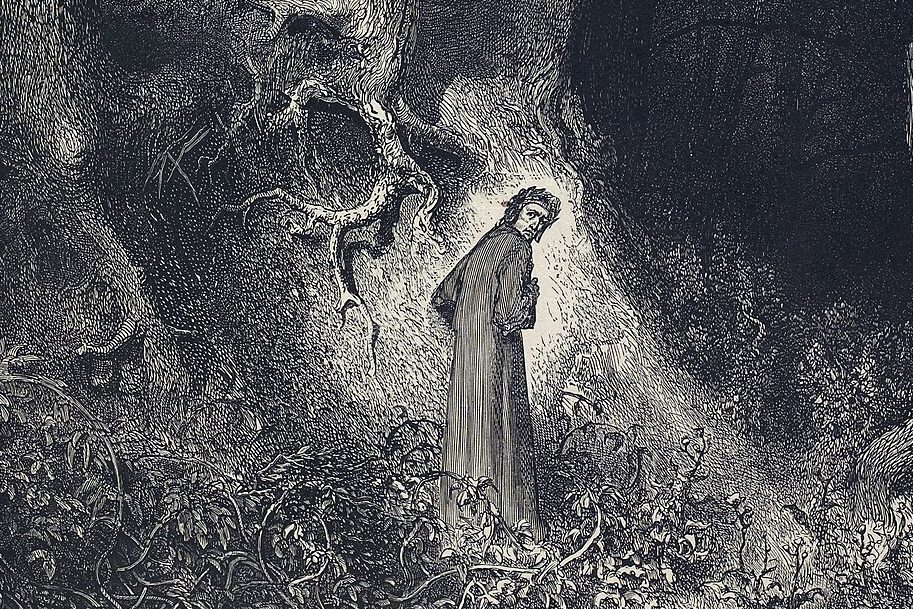
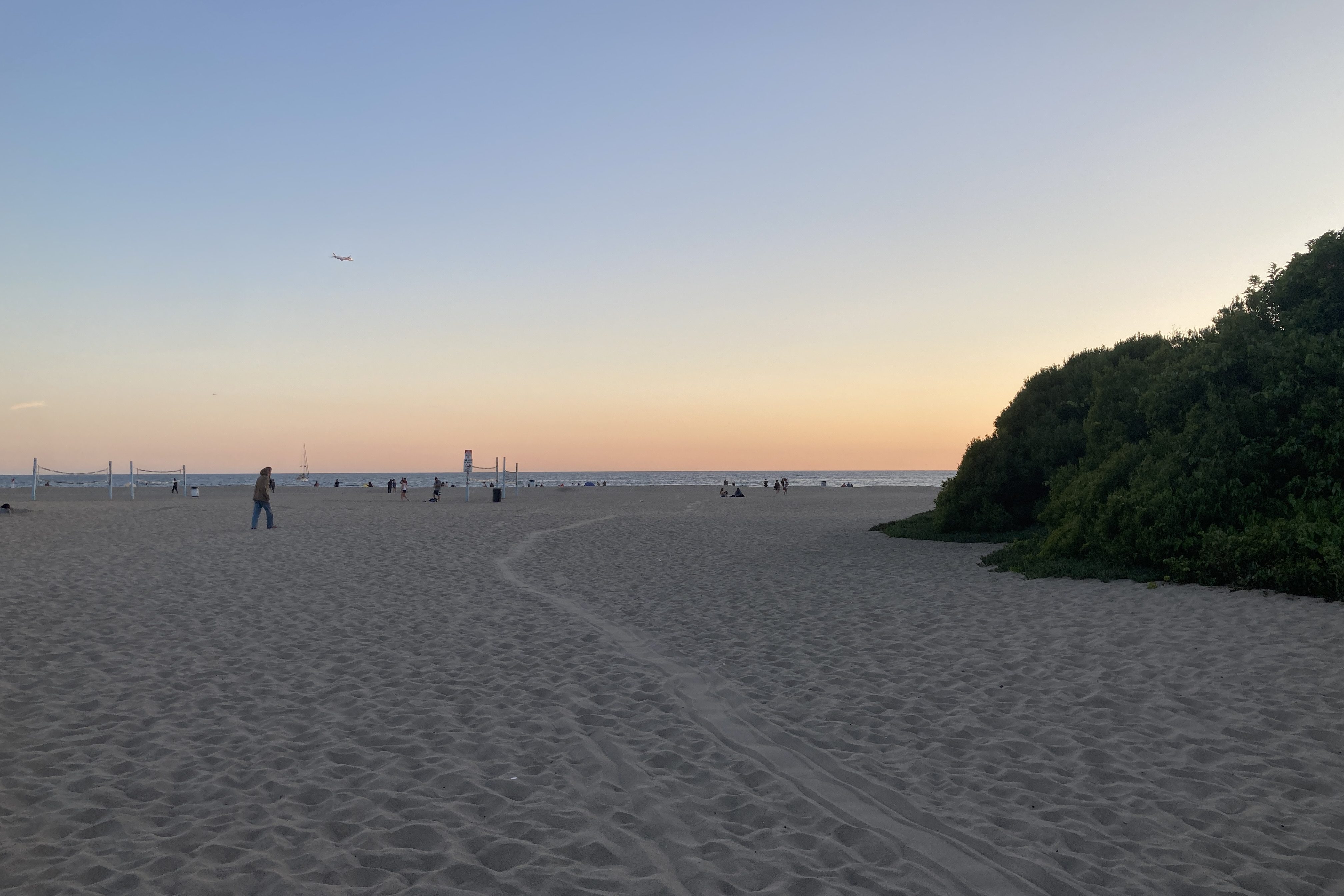
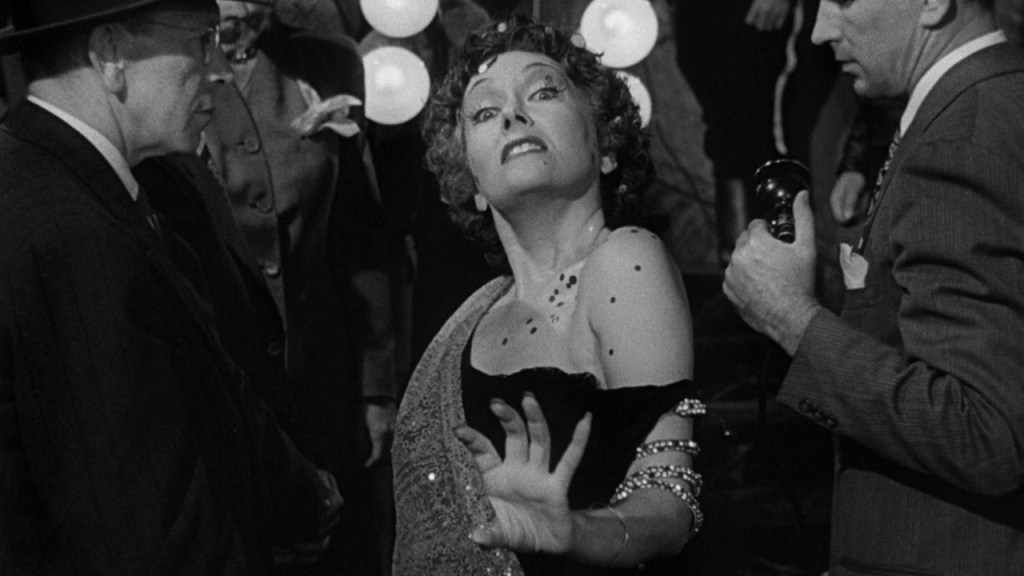
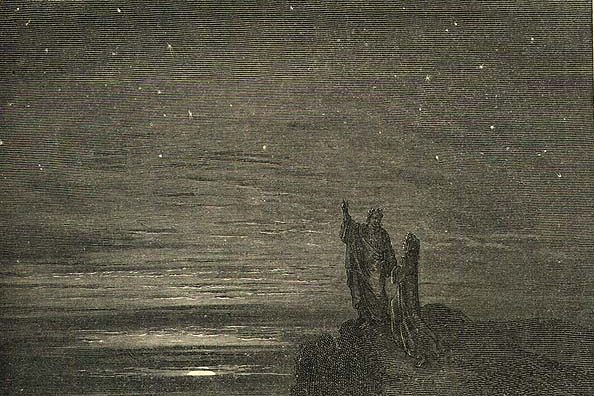
 Mr Magpie